
- ENVIRONMENTAL SYSTEMS | Silt Curtains
Silt Curtains and Silt Control Systems in Saudi Arabia
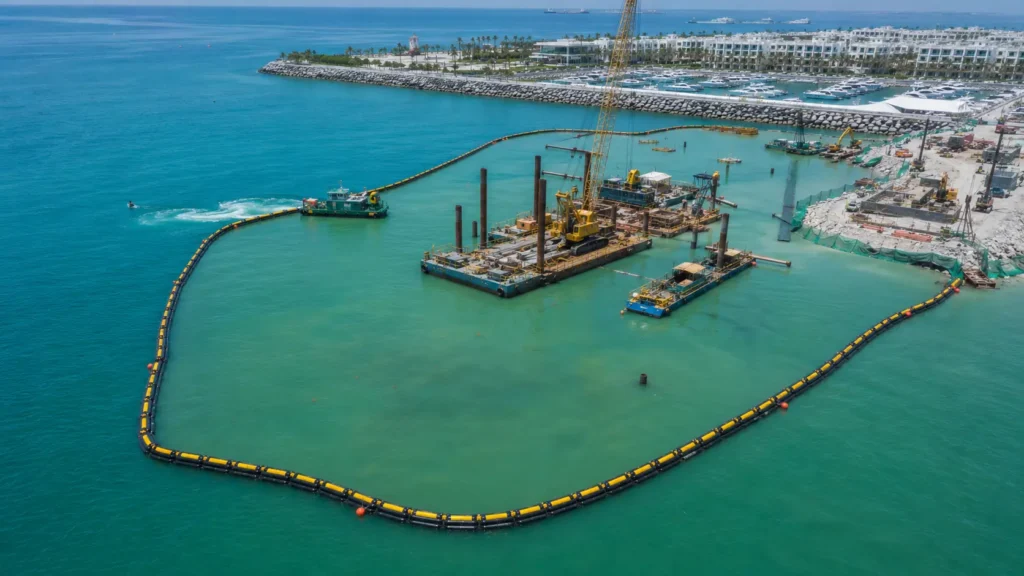
Silt curtain systems help control suspended sediment during marine, shoreline, lagoon, dredging, excavation and water-facing construction activities. They create a managed work zone around disturbed water so sediment movement can be reduced while site teams continue their planned works. A good silt control setup depends on water depth, current movement, work location, anchoring method, access for inspection and the type of sediment being managed. Our scope can include silt curtains, containment planning, deployment support, silt removal coordination and handover checks for projects that need cleaner, more controlled water-side operations.
Silt Control for Water-Side Construction and Environmental Protection
Water-side construction can disturb fine sediment quickly. Once the work zone becomes active, suspended material can spread through basins, channels, lagoons, ponds or coastal edges if containment is not planned early. Silt curtains help create a clearer boundary between the active work area and the surrounding water. We support projects that need practical silt control around construction zones, maintenance areas, dredging points, intake or outfall works, shoreline improvements and confined water bodies. The goal is to plan a containment approach that fits the actual site conditions instead of forcing a standard layout onto every project.

Our Silt Curtain and Containment Services
Silt control is not just about placing a floating barrier in the water. The curtain type, anchoring layout, overlap, depth, work sequence and removal method all need to match the activity taking place on site. The services below cover the main elements needed to contain sediment, support cleaner operations and keep the work zone easier to manage.
Floating silt curtain systems for construction zones, dredging areas, shoreline works, lagoons, ponds and sheltered water bodies. We plan curtain layout around water depth, current movement, access points, anchor positions and the activity taking place inside the work zone.
Containment planning for projects that need a controlled sediment boundary during excavation, maintenance, marine works, beach works, intake areas or outfall locations. Solutions can include curtain selection, staged layouts, anchoring coordination, overlap planning and inspection access.
Silt removal support for areas where sediment has collected behind curtains, inside basins, around structures or within active work zones. The scope can be coordinated with pumping, dredging, disposal routes, site access and environmental control requirements.
Installation, anchoring, repositioning and inspection support for silt curtain systems during active works. We help keep the containment layout practical so site teams can monitor curtain condition, adjust the system when needed and prepare for final removal.
Built Around Work Zones, Water Movement and Access
Every site behaves differently once work begins. A protected basin may need a lighter containment layout, while an exposed shoreline or active waterway may need stronger anchoring, better overlap and more frequent inspection. The system should follow the work method, not only the edge of the water. We help review the project area, likely sediment movement, deployment access, inspection routes, working equipment and removal approach before installation starts. This makes the setup easier to manage during daily operations and helps reduce last-minute changes on site.
- Silt curtain layout and containment planning
- Anchoring, floatation and skirt depth coordination
- Work zone separation for active water-side activities
- Silt removal and sediment handling support
- Inspection access and adjustment planning
- Testing, documentation and handover support
Containment Planning, Removal and Handover Details
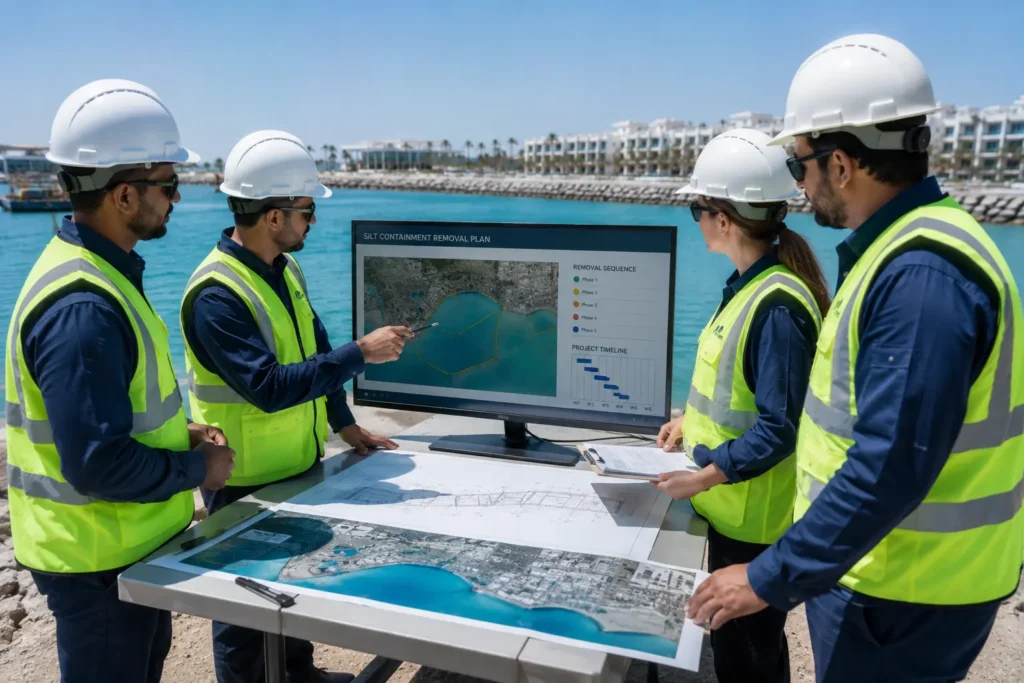
Silt curtain performance depends on more than the curtain itself. Water depth, current direction, wind exposure, bottom profile, boat access, work equipment, anchor spacing and sediment type all affect how the system should be planned. Removal also needs a clear method. If sediment is allowed to build up without a plan, the work zone can become difficult to maintain and the curtain can lose effectiveness. We keep silt removal, inspection points, safe access and disposal coordination in view during the planning stage.
Why Choose Us for Silt Curtains
in Saudi Arabia
A silt control system needs to be practical for the water, the work area and the people managing the site. We focus on containment layouts that can be installed, inspected, adjusted and removed without creating unnecessary disruption to the project.
Site-Based Planning
We review the work zone, water movement, access points and expected sediment before recommending a containment approach.
Clear Containment Layouts
Curtain placement, anchoring, overlap and removal access are planned so the system can work as a clean boundary around the active area.
Practical Installation Support
We consider deployment access, equipment movement, inspection routes and safe adjustment during active site conditions.
Removal and Maintenance Thinking
Silt buildup, curtain cleaning, repositioning and final removal are treated as part of the scope, not an afterthought.
Coordination With Site Teams
The containment plan can be aligned with civil works, marine works, dredging teams, pumping operations and project supervision.
Saudi Project Coverage
We support coastal, waterfront, lagoon, pond and water infrastructure projects across Saudi Arabia.
Silt Curtain Projects We Support
Different water-side works need different containment decisions. Some sites need short-term control during maintenance,
while others need staged containment around dredging, excavation or shoreline construction.
We adjust the scope around the actual work method and site conditions.
01
Dredging, excavation and maintenance work zones
02
Shoreline improvement and beach construction areas
03
Lagoon, lake, pond and basin projects
04
Intake, outfall and utility crossing works
05
Berth, quay, jetty and access structure works
06
Temporary environmental control for water-side construction
Service Areas Across Saudi Arabia
We support jetty construction and marine works across Saudi Arabia. Project coverage can include coastal developments, resort destinations, waterfront communities, port-adjacent facilities, and private marine sites.
Jeddah
Dammam
Al Khobar
Yanbu
Jazan
Tabuk
Red Sea coast
Eastern Province
NEOM region and northwest coast project areas
Other coastal and waterfront locations in Saudi Arabia
What are silt curtains used for?
Silt curtains are used to help contain suspended sediment during water-side works such as dredging, excavation, shoreline construction, lagoon maintenance, utility works and similar activities.
What is a silt containment solution?
A silt containment solution is the planned use of curtains, anchoring, overlaps, work zones, inspection routes and removal methods to control sediment movement during a specific project activity.
Can silt curtains be used during dredging works?
Yes. Silt curtains can be used around selected dredging or excavation areas when the site conditions, water movement, work method and access requirements allow an effective containment layout.
Do you provide silt removal support?
Yes. Silt removal can be coordinated where sediment collects behind curtains, within basins or inside active work zones. The method depends on sediment volume, access, disposal route and project requirements.
How is a silt curtain installed?
A silt curtain is usually deployed with floats, a skirt, anchors or fixing points, and overlaps where needed. The exact method depends on water depth, current, work area and site access.
What affects the choice of silt curtain?
Key factors include water depth, current, wind exposure, sediment type, work duration, access for inspection, anchor locations, equipment movement and removal requirements.
Which areas in Saudi Arabia do you serve?
The service can support projects across Saudi Arabia, including Jeddah, Dammam, Al Khobar, Yanbu, Jazan, Tabuk, Red Sea coast, Eastern Province and other water-side project locations.
How do we start a silt curtain project?
Start with the site location, drawings or layout, water depth, work method, access points, expected sediment activity and target timeline. From there, the containment scope can be reviewed.
Silt Curtains FAQs
Start With a Clear Silt Control Plan
Share your site layout, water depth, work activity, access points and target schedule. We can review the
scope and help plan the right next step for silt curtains, containment support or silt removal.