
- MECHANICAL AND PLUMBING | Aeration System
Aeration Systems for Water Bodies and Marina Basins in Saudi Arabia
Aeration systems help improve water movement, oxygen transfer and surface appearance in basins, lagoons, lakes, ponds and controlled waterfront areas. A well-planned system can support healthier circulation, reduce stagnant zones, improve odour control and make the water body easier to manage over time. The scope has diffused aeration, surface aerators, decorative or circulation fountains, compressors for diffusers, sinkable tubing, nano bubble aeration and mechanical flushing systems. The right solution depends on water depth, volume, flow pattern, operating hours, equipment location, power availability, access for maintenance and the intended use of the water body.
Aeration Support for Cleaner, Better-Circulated Water Areas
Water that does not move properly can become difficult to operate around. Low oxygen, dead zones, sediment build-up, algae pressure and poor circulation can affect the look, smell and day-to-day use of a facility. We plan aeration and circulation systems around the actual shape of the water area, not only the equipment list. Depth, access, wind exposure, shoreline activity, public areas, pumps, service routes and maintenance needs all influence the final layout. For coastal developments, lagoons, lakes, ponds and enclosed basins, the best system is usually the one that keeps equipment accessible, energy use practical and water movement consistent across the areas that matter most.
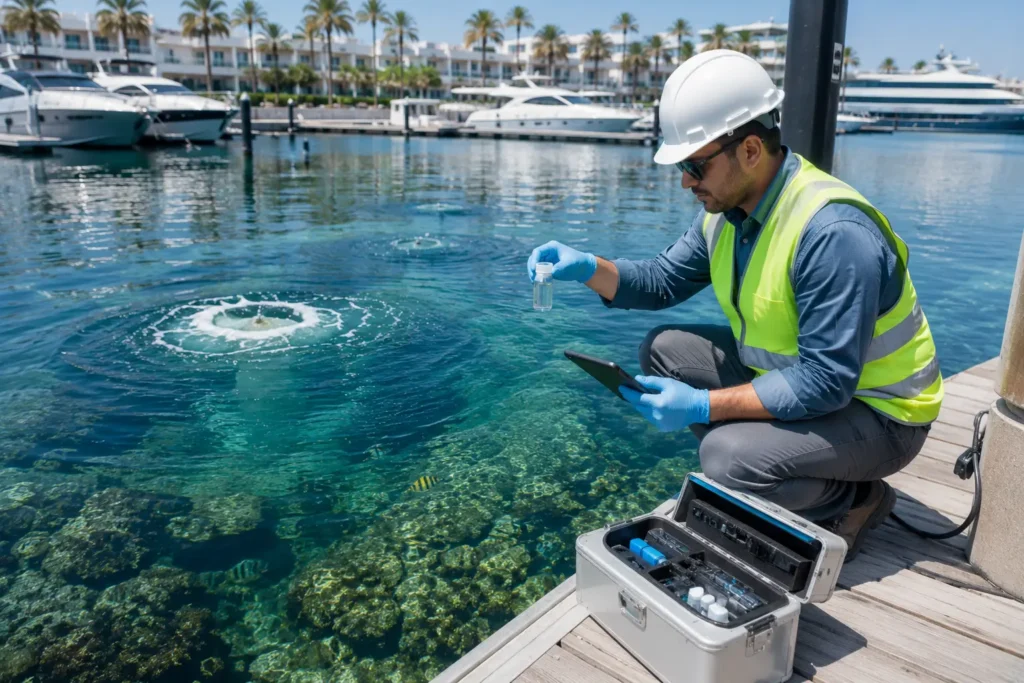
Our Aeration System Services
Aeration equipment should be selected around water behaviour, not installed as a single product everywhere. The services below cover the main systems used to introduce oxygen, create movement, improve circulation and support long-term operation.
Diffused aeration systems move air through underwater diffusers to increase oxygen transfer and support deeper circulation. They are useful where the water body needs steady aeration from below, with equipment planned around depth, compressor location, tubing routes and maintenance access.
Surface aerators help move and oxygenate water from the top layer. They can support ponds, lagoons, treatment zones and open water areas where surface agitation, oxygen transfer and visible movement are required.
Fountains can provide both circulation support and a clean visual feature for public-facing water bodies. The layout should consider spray pattern, wind drift, lighting coordination, power supply, anchoring, access and the effect needed for the surrounding area.
Compressors, diffuser assemblies and sinkable tubing form the working network behind many aeration systems. We help coordinate air supply, hose routing, diffuser placement, pressure balance, cabinet location and service access so the system remains practical after handover.
Nano bubble aeration can support oxygen transfer and water quality improvement in lagoons, lakes, ponds, basins and other water bodies where finer bubble distribution is required. The final setup should be reviewed around water volume, target performance and operating conditions.
Mechanical flushing systems help move water through areas that need stronger circulation or reduced stagnation. These systems can support enclosed basins, narrow channels, berth zones and water areas where natural movement is limited.
Built Around Oxygen, Circulation and Practical Maintenance
A successful aeration system depends on how air and water move through the full area. A diffuser placed in the wrong zone, a poorly routed tube, an undersized compressor or a hard-to-reach equipment cabinet can make the system harder to operate than it should be. We look at the water body as a complete operating area. That includes oxygen demand, circulation gaps, equipment location, access routes, electrical supply, noise sensitivity, service intervals and safe maintenance points. The aim is to create a system that improves circulation while remaining clean, accessible and manageable for operators.
- Diffuser and tubing layout coordination
- Compressor position and service access planning
- Surface aerator and fountain placement support
- Nano bubble equipment coordination
- Mechanical flushing route and flow review
- Testing, inspection and handover support
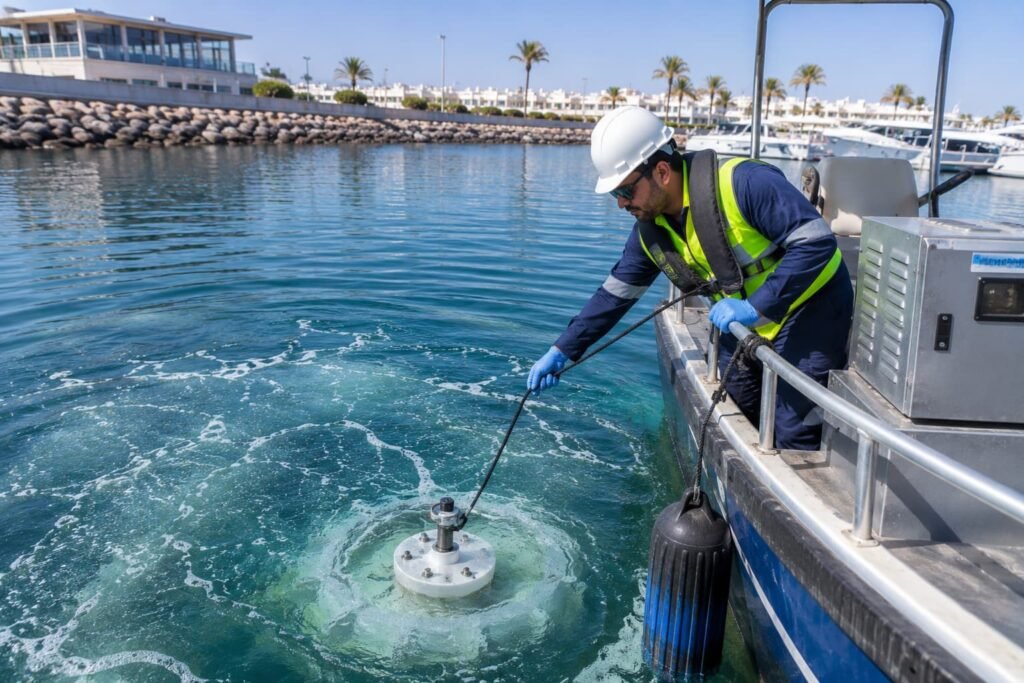
Equipment Layout and Water Body Design Details
Aeration performance is affected by depth, water volume, basin shape, sediment level, wind direction, temperature, service access and the way people use the surrounding space. These details should be checked before equipment is selected. Diffused systems need the right balance between compressor capacity, tubing length, diffuser quantity and operating pressure. Surface systems need stable placement, safe power routing and clear maintenance access. Fountains and nano bubble systems need careful coordination with visual, operational and water quality goals. Where required, aeration can be coordinated with mechanical flushing, stormwater, sewage treatment, potable water interfaces, electrical supply, controls and wider facility operation.
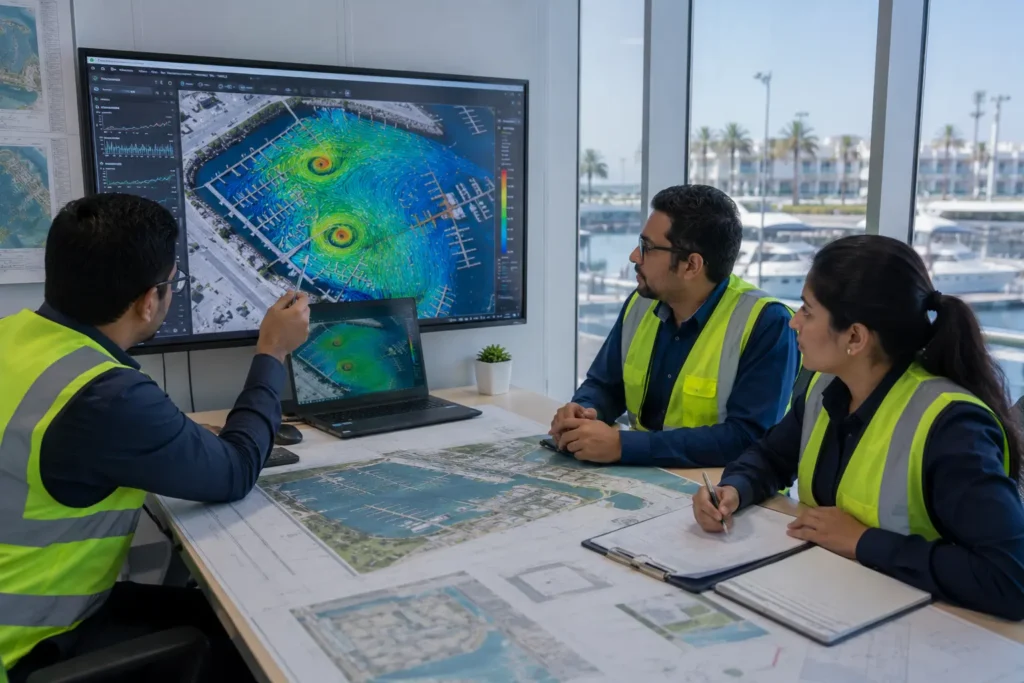
Why Choose Us for Aeration Systems
in Saudi Arabia
You need an aeration partner who understands both the equipment and the water body it serves. We keep the scope practical, coordinated and easy for project teams to review before installation begins.
Water Movement Focus
We plan around oxygen transfer, circulation, stagnant zones, equipment access and the real operating needs of the site.
System-Specific Selection
Diffused aeration, surface aeration, fountains, nano bubbles and flushing systems are selected around the use case, not treated as one standard solution.
Clean Equipment Coordination
Compressors, tubing, diffusers, pumps, power routes and access points are reviewed together so the system works as one package.
Serviceable Layouts
We consider future inspection, cleaning, hose access, cabinet access and component replacement before the work reaches site.
Support for Different Water Bodies
The scope can support lagoons, lakes, ponds, basins, enclosed water areas and public-facing waterfront spaces.
Saudi Arabia Coverage
We support aeration and water circulation projects across key development areas, coastal cities and inland project locations.
Aeration Projects We Support
Every water body has a different operating issue. Some need better oxygen transfer, some need surface movement, some need visual fountains, and others need stronger circulation through enclosed or low-flow areas. We adjust the scope around the actual site condition.
01
Lagoons, lakes, ponds and decorative water bodies
02
Controlled basins and enclosed water areas
03
Resort, hospitality and public realm water features
04
Coastal and waterfront development zones
05
Small-scale treatment and circulation support areas
06
Upgrade and replacement works for existing aeration systems
Service Areas Across Saudi Arabia
We support jetty construction and marine works across Saudi Arabia. Project coverage can include coastal developments, resort destinations, waterfront communities, port-adjacent facilities, and private marine sites.
Jeddah
Dammam
Al Khobar
Yanbu
Jazan
Tabuk
Red Sea coast
Eastern Province
NEOM region and northwest coast project areas
Other coastal and waterfront locations in Saudi Arabia
What are aeration systems used for?
Aeration systems are used to add oxygen, improve circulation and reduce stagnant conditions in lagoons, lakes, ponds, basins and other controlled water bodies. The exact system depends on the site condition and operating goal.
What is diffused aeration?
Diffused aeration uses underwater diffusers connected to compressors to release air below the surface. It can help move oxygen through deeper water zones and support more consistent circulation.
When should surface aeration be used?
Surface aeration can be useful where the upper water layer needs movement, oxygen transfer or visible agitation. It is often selected around water depth, access, installation location and the level of circulation needed.
Can fountains be part of an aeration system?
Yes. Fountains can support water movement while also improving the appearance of a public or hospitality water feature. Their effect depends on spray pattern, water depth, power supply and site layout.
What are nano bubble aeration solutions?
Nano bubble systems create very fine bubbles that can support oxygen transfer and water quality improvement in selected water bodies. The design should be reviewed around water volume, operating conditions and target results.
What is a mechanical flushing system?
A mechanical flushing system helps move water through areas where natural circulation is weak. It can support enclosed basins, low-flow areas, narrow channels or zones where stagnant water needs to be reduced.
Do aeration systems need compressors and tubing?
Many diffused aeration systems use compressors, air lines, sinkable tubing and diffusers. These components should be selected and routed carefully to support pressure balance, access and long-term maintenance.
How do we start an aeration project?
Start with the site location, drawings if available, water depth, approximate water volume, current issue, preferred system type and target timeline. From there, the scope can be reviewed and the next step can be planned.
Aeration Systems FAQs
Start Your Aeration Scope With Clear Site Details
Share your site layout, water depth, water body size, circulation issue, preferred system type and project timeline.
We can review the scope and help plan the next step.