
- Environmental Systems | Aeration System for Water
Aeration Systems for Water Quality Control in Saudi Arabia
Aeration systems help improve water movement, dissolved oxygen and overall water quality in lagoons, enclosed basins, ponds and waterfront water bodies. They are often used where stagnant water, low oxygen, odour, algae growth or poor circulation can affect the appearance, operation and long-term condition of the site. A good aeration plan is not only about placing equipment in the water. It should respond to water depth, surface area, circulation patterns, organic load, maintenance access, power availability and the way the facility is used. With the right layout, aeration can support cleaner water, better oxygen transfer, reduced nuisance odours and a more controlled environment for daily operation.
Aeration Planning for Lagoons, Basins and Water Bodies
Water bodies that look calm on the surface can still develop problems underneath. Poor circulation allows organic matter to settle, oxygen levels to drop and nuisance conditions to build up over time. Once that happens, algae blooms, unpleasant smells and cloudy water can become harder to manage. We plan aeration systems around the actual site condition, not a one-size-fits-all layout. The scope can support lagoons, retention basins, decorative ponds, managed water bodies, marine-side basins and operational waterfront areas where better circulation and oxygenation are needed.
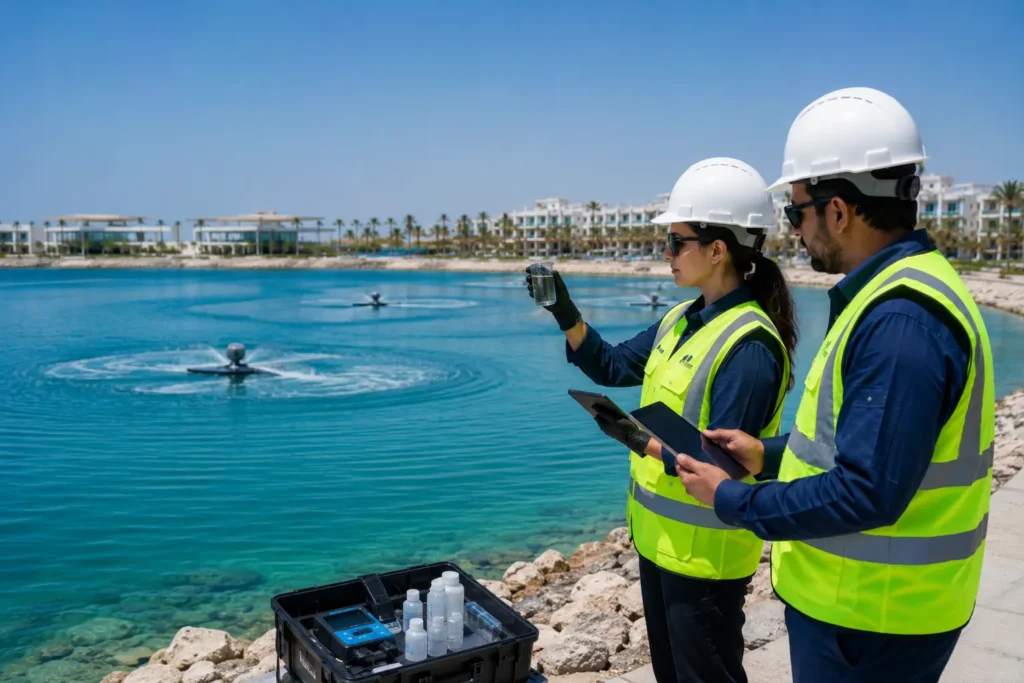
Our Aeration System Services
The services focus on the two main outcomes most water-quality projects need from aeration: controlling algae pressure and reducing odour at the source. Each solution is reviewed around water movement, oxygen demand, equipment placement, power access and long-term maintenance.
Aeration can help reduce the stagnant, low-oxygen conditions that often support recurring algae problems. We assess circulation zones, water depth, organic loading, sunlight exposure, equipment location and operating schedule so the system supports better water movement and helps limit bloom-friendly conditions.
Odour issues often develop when water movement is poor and organic matter breaks down in low-oxygen areas. Aeration supports oxygen transfer and circulation, helping reduce the conditions that allow unpleasant smells to build up around lagoons, ponds, basins and waterfront water bodies.
Built Around Circulation, Oxygen Transfer and Maintenance Access
Aeration works best when it is connected to the site’s real operating conditions. A shallow pond, a deeper lagoon and a sheltered water basin will not respond to the same equipment layout. Flow patterns, dead zones, equipment access and operating hours all affect the final system. We help define where aeration points should be located, how the air or mechanical movement should be distributed, and how the system can be reached for inspection or servicing. This keeps the installation practical instead of creating a system that looks correct on paper but is difficult to operate after handover.
- Water depth, basin shape and circulation review
- Aeration point layout and equipment placement
- Power supply, tubing route and control coordination
- Access planning for cleaning, inspection and service
- Operational review for seasonal or recurring water-quality issues
- Testing, adjustment and handover support
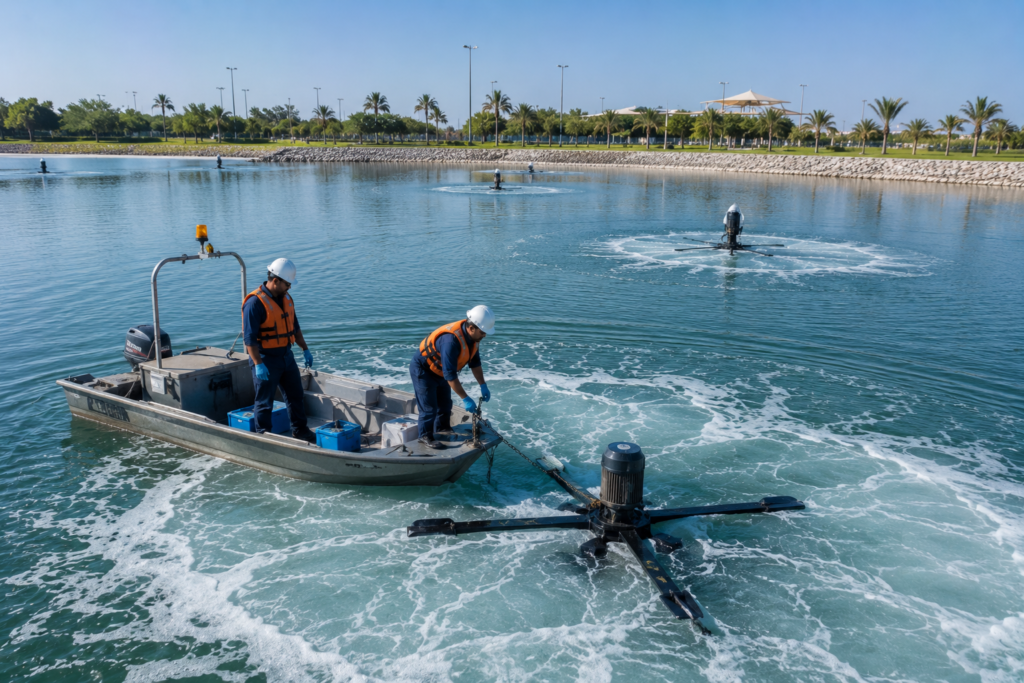
Equipment Selection and Installation Details
Aeration equipment has to be selected with the water body in mind. Oxygen transfer, bubble distribution, mixing pattern, compressor location, tubing protection, diffuser position, safety access and noise control can all affect performance. The installation should also consider how the system will be maintained. Compressors, panels, pipework, hoses, diffusers and support fittings should be reachable without disrupting the entire site. Where algae or odour concerns are already present, the system may also need practical operating guidance after installation so the facility team knows what to monitor.
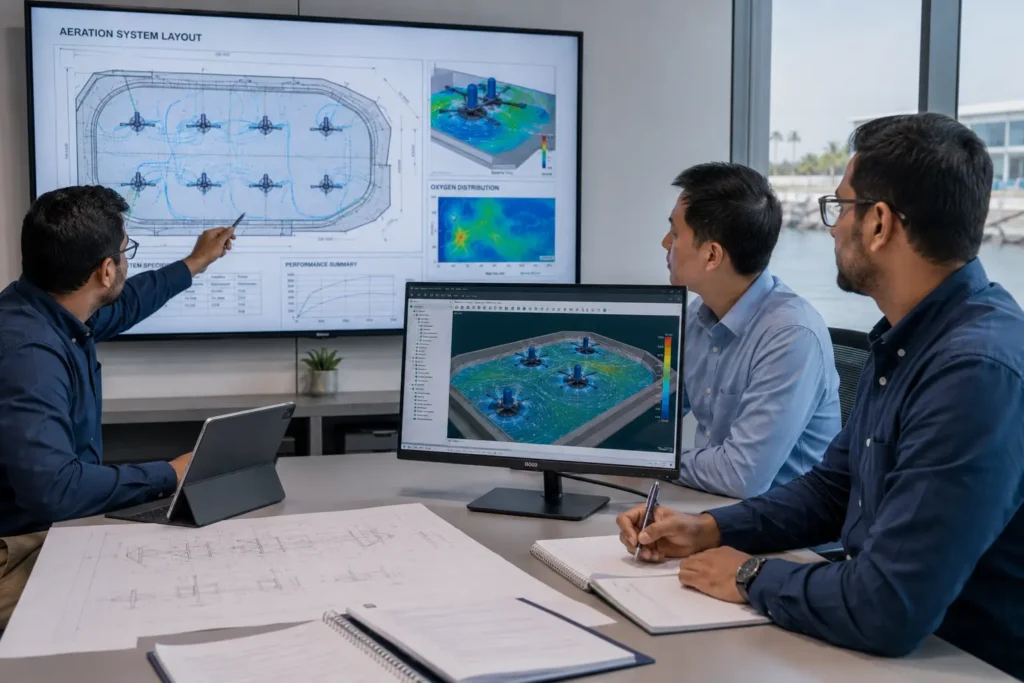
Why Choose Us for Aeration Systems
We support jetty construction and marine works across Saudi Arabia. Project coverage can include coastal developments,
resort destinations, waterfront communities, port-adjacent facilities, and private marine sites.
Water-Quality Focus
The system is planned around the problem being solved, whether the concern is algae pressure, odour, stagnant zones or low oxygen conditions.
Practical Site Planning
We look at depth, access, circulation, equipment location and maintenance needs before recommending the final arrangement.
Cleaner Operation
Aeration layouts are designed to support regular operation without creating difficult service points or unnecessary obstruction.
Equipment Coordination
Compressors, tubing, diffusers, controls and power connections are coordinated as one working system.
Long-Term Maintenance
The system is easier to manage when access, inspection, cleaning and replacement needs are considered early.
Project Team Support
We can work with owners, consultants and site teams to align the aeration scope with the wider environmental systems package.
Projects We Support
Aeration requirements change from one water body to another. Some projects need better circulation, some need odour control, and others need support for recurring algae problems. We shape the scope around the issue, the site layout and the operation plan.
01
Lagoons and managed water bodies
02
Ponds, lakes and decorative water features
03
Waterfront basins and sheltered water zones
04
Resort, hospitality and public-realm water areas
05
Environmental control and water-quality improvement projects
06
Upgrade works for recurring algae or odour issues
Service Areas Across Saudi Arabia
We support jetty construction and marine works across Saudi Arabia. Project coverage can include coastal developments, resort destinations, waterfront communities, port-adjacent facilities, and private marine sites.
Jeddah
Dammam
Al Khobar
Yanbu
Jazan
Tabuk
Red Sea coast
Eastern Province
NEOM region and northwest coast project areas
Other coastal and waterfront locations in Saudi Arabia
What is an aeration system used for?
An aeration system is used to add movement and oxygen to a water body. It can support better circulation, reduce stagnant areas and help manage conditions linked to algae growth and odour.
Can aeration help with algae blooms?
Aeration can support algae bloom mitigation by improving circulation and oxygen conditions. It is not a single cure for every algae issue, so site conditions, nutrient sources, sunlight exposure and maintenance practices should also be reviewed.
How does aeration reduce odour?
Many odour problems become worse when water is stagnant and oxygen levels are low. Aeration helps improve oxygen transfer and water movement, which can reduce the conditions that allow odours to build up.
What information is needed before selecting an aeration system?
Useful details include water body size, depth, current water condition, algae or odour history, available power, access points, site drawings and any operational restrictions.
Can aeration systems be added to existing water bodies?
Yes. Aeration systems can often be planned for existing lagoons, ponds, basins and managed water bodies. The layout should be reviewed carefully so installation and future maintenance are practical.
Do aeration systems need maintenance?
Yes. Compressors, tubing, diffusers, floats, controls and other components should be inspected and serviced based on the system design, operating conditions and manufacturer guidance.
How do we start an aeration project?
Start by sharing the site location, water body type, approximate size and depth, main issue, available drawings or photos and preferred timeline. From there, the scope can be reviewed and the next step can be planned.
Aeration Systems FAQs
Discuss Your Aeration Requirement
Share your site details. We can review the requirements and guide you on the right next step.