
- Environmental Systems | Oil Detection Systems
Oil Detection Systems for Waterfront Facilities in Saudi Arabia
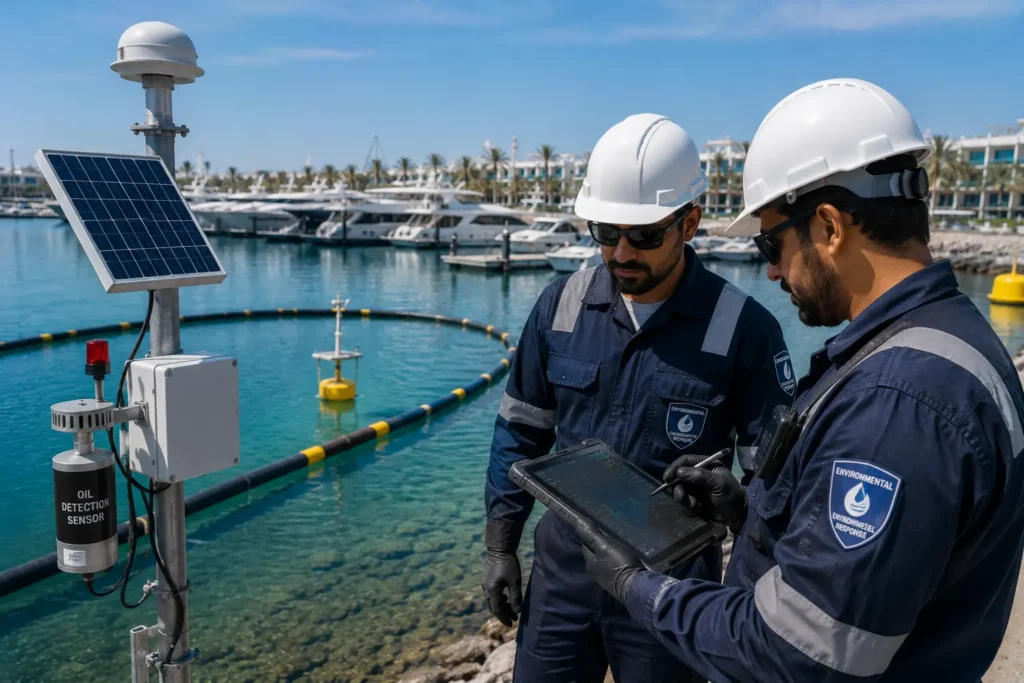
A reliable setup does not rely on one product alone. Detection, containment, skimming and spill response supplies need to work together, with each component placed around water movement, site access, operating risk and the response procedure used by the facility. Oil detection systems help operators identify potential oil, fuel or hydrocarbon contamination before it spreads across sensitive water areas. For berth zones, fuel points, stormwater outlets, pump areas and service basins, the system should support early warning, clear response action and practical access for maintenance teams.
Oil Spill Detection and Response Support
Oil control is easier when the site is prepared before a leak or spill occurs. In busy waterfront facilities, small releases can move quickly through surface water, drainage channels or confined basin areas if detection and response equipment is not planned correctly. We support oil detection and response-related systems for projects that need better monitoring, containment readiness and practical cleanup support. The focus is to help project teams create a clear chain of action: detect the issue, contain the affected area, recover floating oil where possible and keep spill kits available at the right locations.
Our Oil Detection and Spill Response Services
Oil detection and response systems should be planned around the risk points on the site. The services focus on early identification, containment, recovery and practical response supplies so the facility is better prepared for leaks, fuel handling incidents or surface contamination events.
Oil detection systems support early identification of oil sheen, fuel leaks or hydrocarbon presence in selected water or drainage areas. System planning can include sensor placement, alarm interfaces, inspection access, cabling routes and coordination with the site response plan.
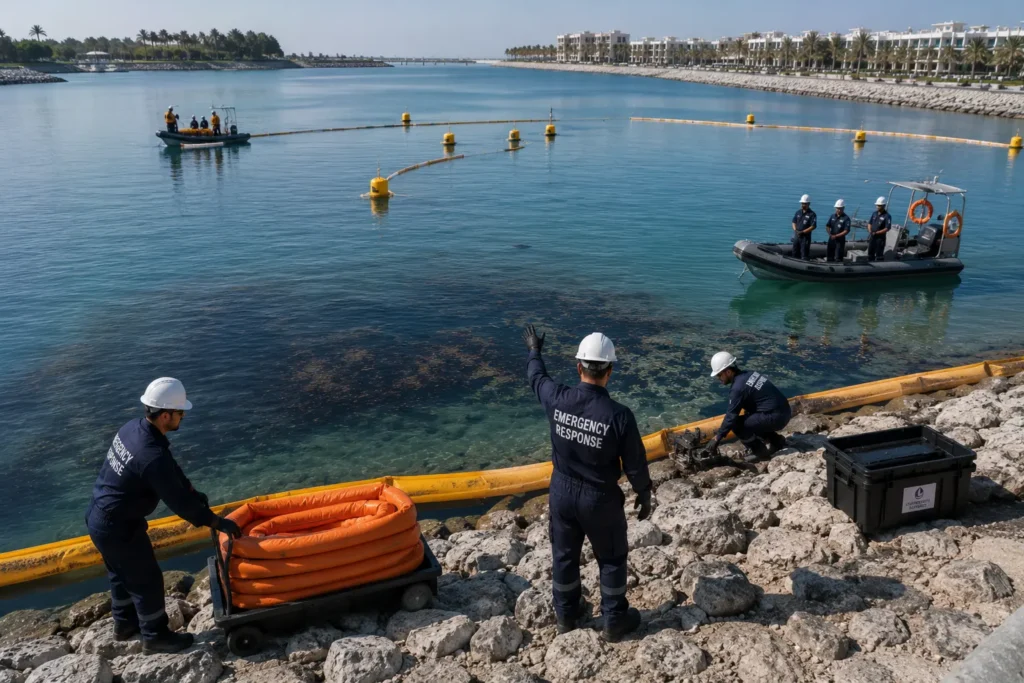
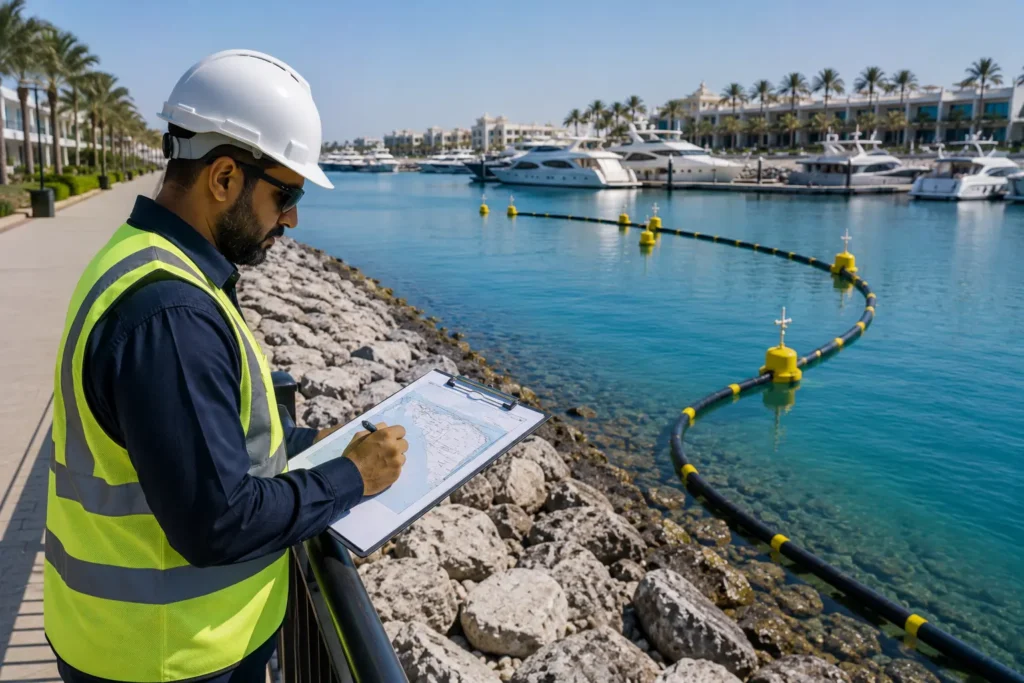
Oil containment booms help limit the movement of floating oil in controlled water areas. Boom selection and placement should consider water movement, access points, anchoring, deployment method, storage location and how response teams will reach the affected area.
Oil skimmers support recovery of floating oil after containment. The right skimmer approach depends on the expected oil type, water conditions, access limitations, recovery rate, storage method and how the recovered material will be handled during response work.
Oil spill kits provide fast access to absorbents and response tools for small spills around fuel points, equipment areas, service docks and maintenance zones. Kits may include absorbent pads, socks, booms, disposal bags, gloves and clear usage instructions based on project needs.
Planned for Detection, Containment and Response Readiness
Oil-related incidents need a fast and organized response. Detection systems can alert operators, but the surrounding equipment must also be ready: containment booms need access, skimmers need a workable recovery point, and spill kits should be close to the areas where risk is highest. We help align these elements with the site layout so operators are not forced to improvise during an incident. Placement, labelling, maintenance access, storage and inspection planning all make the system easier to use when it matters.
- Oil detection point and alarm coordination
- Containment boom layout and deployment planning
- Skimmer access and recovery point review
- Spill kit placement near risk areas
- Inspection, labelling and maintenance support
- Handover documentation for operating teams
Site Conditions, Equipment Access and Environmental Control
Every water-facing site has different risk points. Fuel handling areas, stormwater discharge points, pump rooms, service docks, maintenance zones and confined water basins can all require different control methods. The equipment should be selected around the location, not only around a general product list. Important details had water movement, wind direction, likely spill source, anchoring options, operator access, cable routing, power availability, storage space and the site’s emergency procedure. When these details are reviewed early, the final setup is easier to install, inspect and use.
Why Choose Us for Oil Detection Systems
Oil control systems need practical planning, not just equipment supply. We focus on the details that affect response time, access, maintenance and long-term readiness.
Risk-Based Planning
Equipment is selected around likely spill points, water movement, access routes and the actual response method used on site.
Connected Response Scope
Detection, containment, skimming and spill kits are coordinated so the system supports a clear response sequence.
Practical Site Access
We consider how operators will reach sensors, booms, skimmers and spill kits during inspections or response work.
Environmental Readiness
Systems are planned to help reduce uncontrolled spread and support faster containment when oil or fuel is detected.
Clear Handover
Labelling, inspection points and documentation are included so the operating team understands how the system should be maintained.
Project Coordination
The scope can be aligned with civil, mechanical, electrical and environmental requirements during project delivery.
Projects We Support
Oil detection and response planning is useful wherever fuel, equipment, stormwater discharge or sensitive water areas create a contamination risk.
01
Fuel stations and service points
02
Berth, pontoon and dockside utility zones
03
Harbour and basin water areas
04
Stormwater outfalls and drainage discharge points
05
Maintenance yards and equipment service areas
06
Environmental upgrades for existing facilities
Service Areas Across Saudi Arabia
Jeddah
Dammam
Al Khobar
Yanbu
Jazan
Tabuk
Red Sea coast
Eastern Province
NEOM region and northwest coast project areas
Other coastal and waterfront locations in Saudi Arabia
What are oil detection systems used for?
Oil detection systems are used to identify possible oil, fuel or hydrocarbon contamination in selected water or drainage areas. They help operators respond earlier before the contamination spreads further.
Do oil detection systems replace spill response equipment?
No. Detection supports early awareness, but containment booms, skimmers and spill kits may still be needed for response. The best setup depends on the site risk and operating procedure.
What are oil containment booms used for?
Oil containment booms are used to limit the spread of floating oil in a controlled area. They can help keep contamination closer to the source while recovery or cleanup work is arranged.
When are oil skimmers needed?
Oil skimmers are used when floating oil needs to be recovered from the water surface. The skimmer type and recovery method should match the oil condition, water movement and access available on site.
Where should oil spill kits be placed?
Oil spill kits should be placed near areas where small spills are more likely, such as fuel points, maintenance zones, equipment areas and service routes. They should be visible, accessible and inspected regularly.
Can oil detection be coordinated with alarms or control systems?
Yes. Depending on project requirements, detection points can be coordinated with alarms, control panels or monitoring interfaces. The final arrangement should be reviewed by the project team and relevant consultant.
How do we start an oil detection or spill response project?
Start with the site layout, likely risk points, water areas, fuel handling locations, drainage routes and response requirements. From there, the scope can be reviewed and the right equipment approach can be defined.
Oil Detection Systems FAQs
Discuss Your Oil Detection Requirement
Share your l requirements with our team. We can review the scope and suggest the right next step for detection,
containment, skimming or spill response support.