
- MAINTENANCE AND SUPPORT SERVICES
Marina Electrical Infrastructure Maintenance
Dockside electrical systems need more than occasional repairs. Service pedestals, SOS points, converters, chargers, lighting, cables, ducts and isolation panels all support daily access, vessel service, safety response and facility operation. When these systems are not inspected and maintained properly, small defects can turn into outages, unsafe access points or difficult emergency repairs. Our maintenance support helps keep electrical infrastructure reliable across berths, pontoons, walkways, service areas and shore-side equipment. The scope can include planned inspections, fault checks, cleaning, testing, repairs, replacement planning and documentation for the systems that users and operators depend on every day.
Electrical Maintenance Support for Dockside Power and Safety Systems
Electrical infrastructure in coastal facilities works in a demanding environment. Salt air, moisture, heat, public movement, vessel activity and outdoor exposure can affect panels, pedestals, cable routes, lighting points and charging systems over time. A good maintenance plan looks at the full route of the system, not only the visible equipment. It checks how power is distributed, where cables are exposed, whether access points are safe, how emergency systems respond, and whether equipment can be serviced without disrupting daily operation. We focus on practical maintenance that supports uptime, safer access and cleaner handover records. That means checking the condition of equipment, identifying weak points early, planning replacements where needed and keeping each system easier to operate after the work is complete.
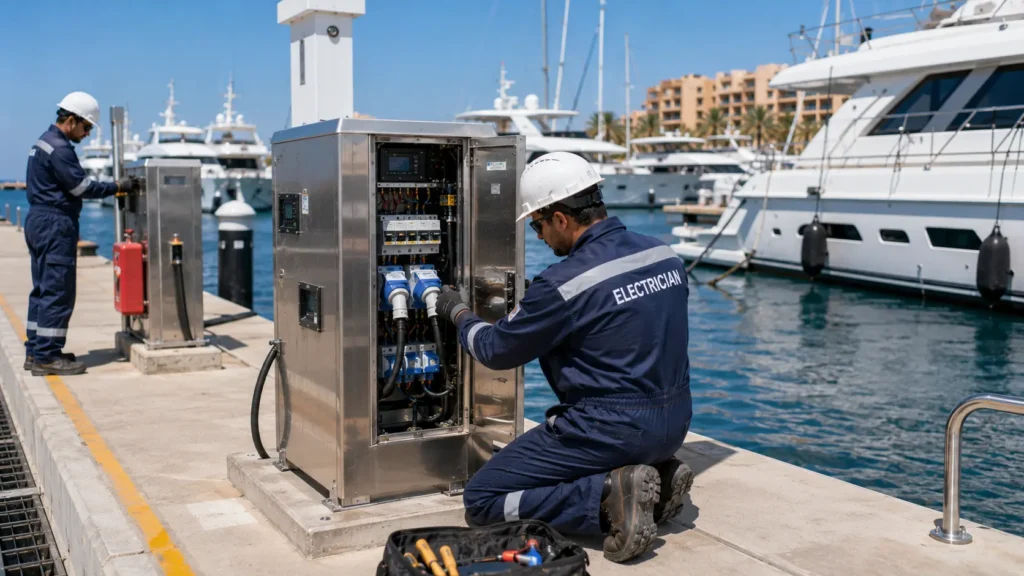
Our Electrical Infrastructure Maintenance Services
The services cover the main electrical systems that need routine inspection, repair planning and coordinated support. Each item is reviewed around its location, condition, safety role, access needs and connection to the wider facility network.
Inspection and maintenance support for service pedestals, SOS points and visible user access locations. Work can include condition checks, enclosure review, internal component inspection, labelling, basic cleaning, connection checks and replacement planning where units are damaged, exposed or difficult to operate.
Maintenance support for power conversion and shore-side isolation equipment that helps manage vessel service connections and sensitive electrical interfaces. We focus on access, ventilation, protection, cable entries, operational condition and safe coordination with the connected distribution system.
Support for AC/DC chargers, electric vessel charging points and DC fast charger infrastructure. Maintenance can include visual checks, cable and connector review, charger access assessment, protection coordination, enclosure condition and planning for upgrades where demand has increased.
Maintenance of lighting around pontoons, walkways, service routes, public areas and operational zones. We review fixture condition, mounting points, cable routes, control points, brightness concerns, access for replacement and safety-critical dark spots that affect movement after sunset.
Review and maintenance planning for trays, ducts, manholes, covers, routes and containment systems that protect power and control cables. This helps identify water ingress, loose covers, blocked access, damaged containment, corrosion, poor labelling and difficult pull routes before they affect service work.
Cable-related support for visible cable runs, terminations, glands, connections, identification, routing, bend areas and testing coordination. The goal is to reduce weak connections, exposed cable risks, unclear circuits and future maintenance delays.
Planned Maintenance That Keeps Electrical Systems Easier to Operate
Electrical maintenance works best when the site is reviewed as a connected system. A pedestal fault may be linked to moisture inside an enclosure, a cable route issue, a damaged socket, poor labelling or access problems around the berth. A lighting outage may start with a fixture, but it can also involve control points, cable protection or upstream distribution. Our approach is to organize the work so operators can see what needs immediate repair, what should be monitored, and what should be planned for replacement during a maintenance window. This keeps the scope practical and helps avoid unnecessary disruption.
- Pedestal and SOS equipment condition review
- Charger, converter and isolation panel checks
- Lighting inspection and replacement planning
- Cable containment and manhole access review
- Cable identification, routing and termination support
- Testing coordination and maintenance documentation
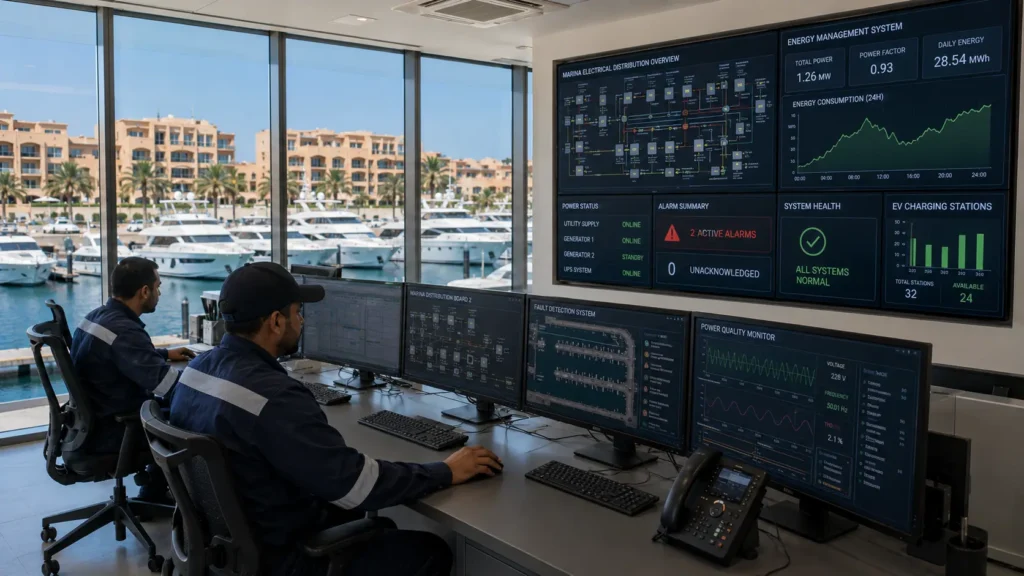
Electrical Access, Safety and Reliability Details
Reliable electrical maintenance depends on small details that are easy to overlook. Enclosures need to close properly. Cable entries need to stay protected. Manholes need safe access. Chargers and converters need enough ventilation and service clearance. Pedestals and SOS points need to remain visible and usable. We pay attention to these details during inspection and maintenance planning. The result is a clearer view of system conditions, safer access for maintenance teams and better support for day-to-day operation. Where replacement or upgrades are needed, the work can be planned with less disruption to users and operations.
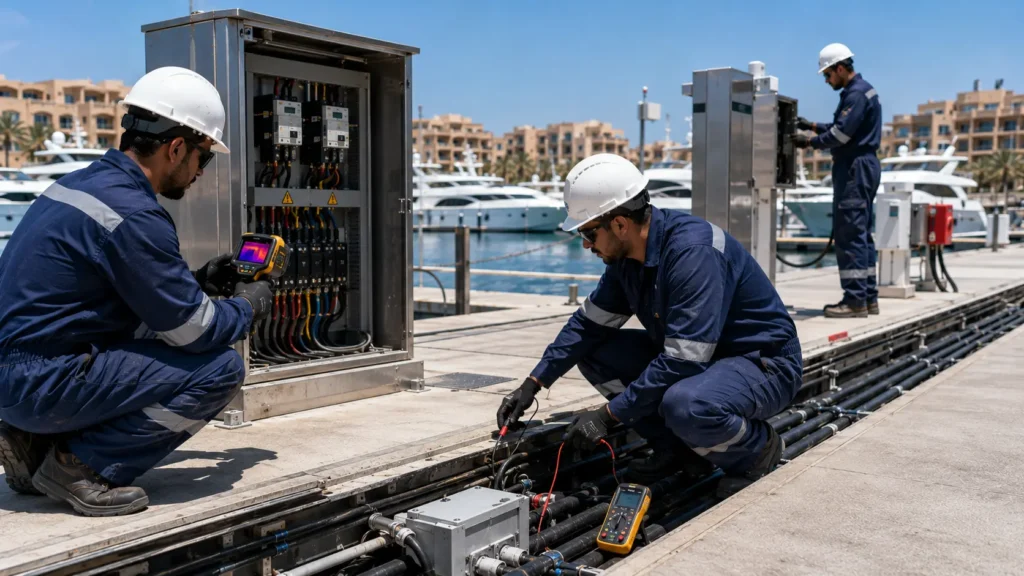
Why Choose Us for Electrical Infrastructure Maintenance
Operational Maintenance Thinking
We look at how equipment is used every day, not only whether it is installed. Access, visibility, response points and service routes all matter.
Connected System Review
Pedestals, chargers, panels, cables, lighting and manholes are checked as related parts of one infrastructure network.
Cleaner Fault Finding
Maintenance is easier when circuits, routes, labels, access points and equipment conditions are reviewed clearly before repairs begin.
Practical Repair Planning
We help separate urgent issues from planned replacements, so teams can manage downtime and budget more sensibly.
Support for Existing Assets
The scope can support older equipment, new additions, upgrades, repairs and handover documentation for ongoing facility management.
Safety and User Experience
Well-maintained systems help keep walkways, service points, charging areas and emergency access locations safer and easier to use.
Maintenance Work We Support
Different sites need different levels of maintenance support. Some need annual testing and inspection, while others need corrective repairs, coating touch-ups, system checks or restraint system review.
01
Routine inspection of service pedestals and SOS pedestals
02
Maintenance of shore-side power support and isolation equipment
03
Charger and DC fast charger condition review
04
Lighting repairs for walkways, pontoons and public access routes
05
Cable containment, manhole and duct route maintenance
06
Electrical asset upgrade and replacement planning
Service Areas Across Saudi Arabia
Jeddah
Dammam
Al Khobar
Yanbu
Jazan
Tabuk
Red Sea coast
Eastern Province
NEOM region and northwest coast project areas
Other coastal and waterfront locations in Saudi Arabia
What is included in marina electrical infrastructure maintenance?
It can include inspection and support for service pedestals, SOS pedestals, frequency converters, AC/DC chargers, DC fast chargers, shore isolation panels, lighting, cable containment, manholes, ducts and cables. The exact scope depends on the installed systems and site condition.
Do service pedestals need regular maintenance?
Yes. Service pedestals are exposed to outdoor use, moisture, salt air and frequent handling. Regular checks help identify enclosure damage, connection issues, poor labelling, damaged sockets and access problems before they affect users.
Can SOS pedestals be checked as part of the same scope?
Yes. SOS pedestals can be reviewed for visibility, access, condition, labelling and functional coordination with the wider safety or response plan.
Do you support charger and DC fast charger maintenance?
Yes. AC/DC chargers and DC fast chargers can be reviewed for enclosure condition, cable and connector wear, access, protection, route condition and serviceability.
Why are shore isolation panels important?
Shore isolation panels help manage safer separation and protection where shore-side equipment interfaces with vessel-side electrical use. Their condition, access and connection points should be checked as part of planned maintenance.
What cable issues are common in exposed facilities?
Common concerns include damaged routes, unclear labelling, water ingress, poor containment, loose glands, worn terminations, exposed cable sections and difficult access through ducts or manholes.
Can maintenance include upgrade recommendations?
Yes. Maintenance findings can be used to recommend repairs, replacements, equipment upgrades, route improvements or better access planning where existing systems no longer support current operation.
What information is needed to start?
Useful information includes drawings, asset lists, photographs, known faults, maintenance history, equipment schedules and any urgent operational concerns.
Electrical Infrastructure Maintenance FAQs
Discuss Your Maintenance Requirements
Send your maintenance concerns by email. We can review the information and help define the next step
for inspection, repair planning or system support.