
- MAINTENANCE AND SUPPORT SERVICES
Fuel System Maintenance and Support in Saudi Arabia
Fuel systems around berths, service docks and waterfront facilities need more than equipment in place. They need safe dispensing points, reliable pumps, clean hose handling, protected storage, spill response readiness and access routes that operators can manage every day. Our support covers fuel dispensers, pumps, filling points, hoses, tanks, fuel pontoons, spill kits and containment booms. Each part is planned around operating flow, maintenance access, environmental control, safety coordination and the way fuel is actually handled on site.
Fuel Handling Support for Waterfront Operations
Fuel infrastructure has to stay organized, visible and easy to maintain. A poorly placed dispenser, hose point or tank access route can slow down operations and create avoidable risk during daily fueling activity. We help plan and maintain practical fuel system layouts that support controlled dispensing, clear operator movement, safe hose management and fast spill response. The focus is to keep the system usable for staff while protecting the surrounding water, structures and public areas.
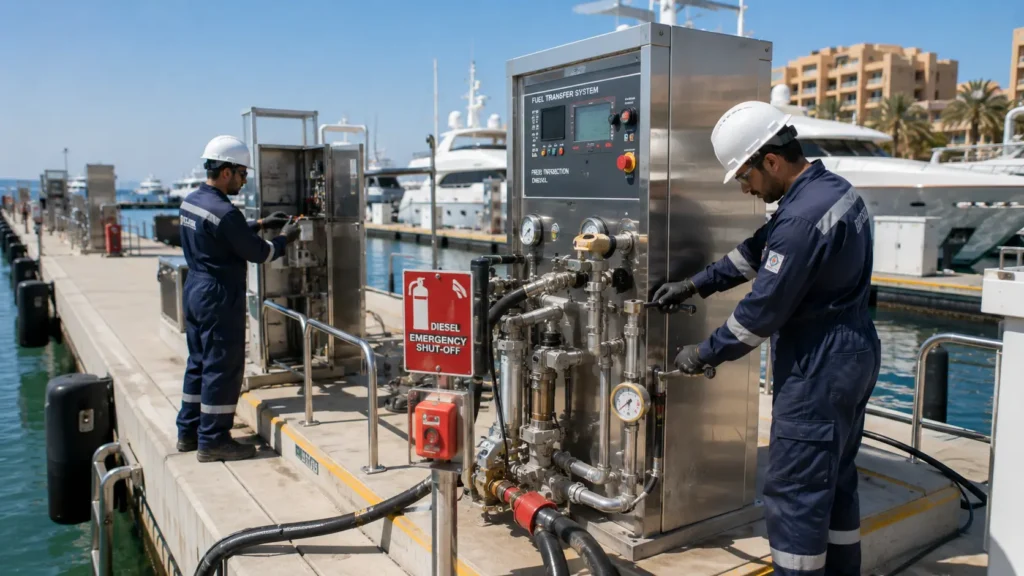
Fuel System Services
The services focus on the main fuel system components that keep dispensing, transfer, storage and emergency response organized. Each item is considered as part of the full fuel handling route, from storage and pumping to the point where operators connect hoses and manage spill control.
Support for high-use dispensing points where operators need clear access, visible controls and reliable connection to the wider fuel supply system. Dispensers should be positioned for safe approach, hose reach, user movement and routine inspection.
Fuel pumps and filling points help move fuel from storage to the service location with the right flow, control and access. Planning should account for pump duty, pipe route, isolation valves, operator reach and safe maintenance clearance.
Fuel hoses must be easy to handle, protected from unnecessary damage and suitable for the required transfer method. We consider hose length, storage position, connection points, movement around the service area and replacement access.
Fuel tanks and fuel pontoons support storage and transfer needs for sites where fuel must be available close to operational areas. These systems need careful planning around containment, access, stability, pipe connections and inspection requirements.
Fuel spill kits provide fast response tools for minor spills and routine incident control. Kits should be located where operators can reach them quickly and should match the type of fuel handling activity taking place on site.
Oil spill containment booms help control floating contamination during fuel handling incidents or emergency response. Boom selection and storage should consider deployment access, water movement, response time and coordination with site procedures.
Designed Around Safe Transfer, Storage and Spill Response
Fuel system performance depends on how well the full route is planned. Storage, pumping, dispensing, hose handling, filling points and spill equipment all need to support one simple goal: safe and controlled fuel movement from start to finish. A good layout helps staff work without unnecessary crossing, awkward hose runs or hidden equipment. It also keeps inspection points, valves, containment areas and emergency response items within practical reach.
- Dispenser and filling point layout review
- Pump, hose and valve access planning
- Fuel tank and pontoon connection coordination
- Spill kit and containment boom positioning
- Inspection access and routine maintenance planning
- Testing, labelling and handover support
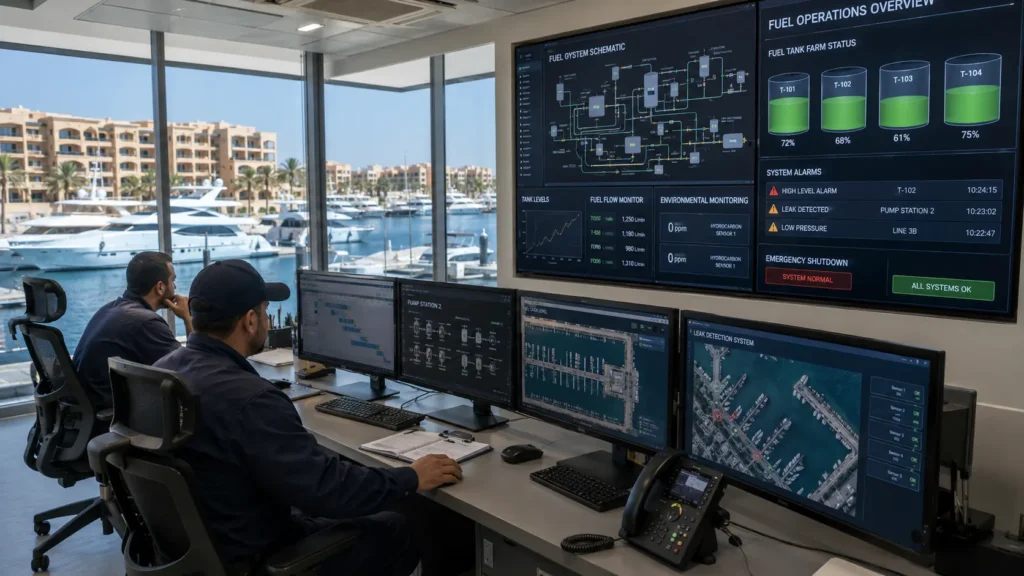
Fuel Equipment Coordination and Maintenance Details
Fuel systems should be planned with clear separation between storage, dispensing, access and response areas. Tanks, pumps, hoses, dispensers, filling points and containment tools all need space for operation, inspection and safe service work. The details matter. Hose reach, valve visibility, pump access, spill kit location, boom deployment route, tank inspection points, grounding requirements and pipe protection can all affect daily reliability. We keep these details visible during scope planning so the final installation is easier to operate and maintain.
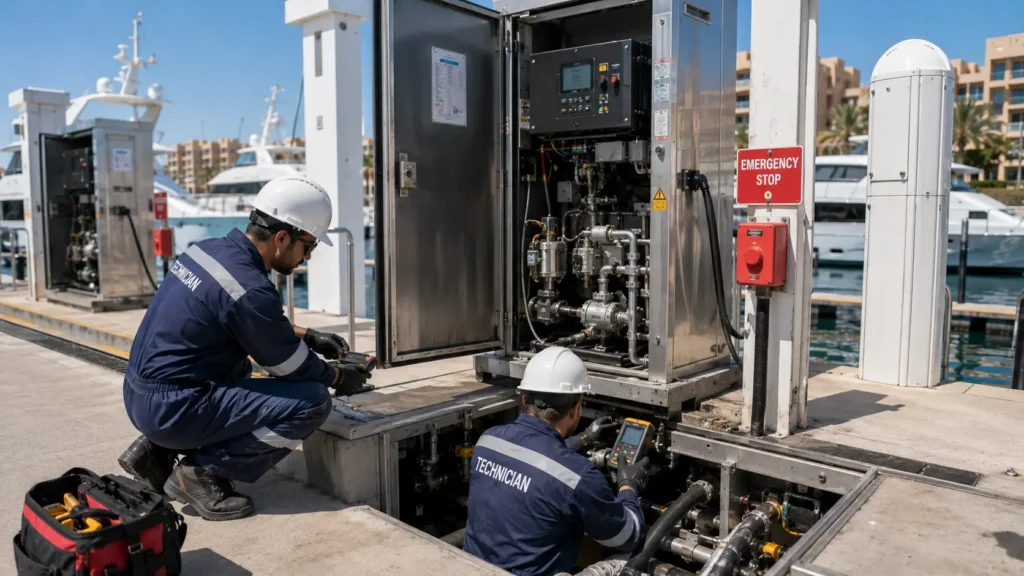
Why Choose Us for Fuel System Maintenance and Support
Fuel support work needs practical thinking. The system must be safe for operators, accessible for maintenance and ready for quick response if a spill or fault occurs.
Operational Layout Thinking
We look at how staff approach, dispense, connect, disconnect, inspect and respond before equipment placement is finalized.
Connected Fuel System View
Dispensers, pumps, filling points, hoses, tanks and pontoons are reviewed as one working route rather than separate items.
Spill Response Readiness
Fuel spill kits and containment booms are positioned with access, deployment and response time in mind.
Maintenance Access
We consider inspection points, valve access, hose replacement, pump servicing and equipment clearance during planning.
Clean Handover Support
Labelling, testing support, documentation and operational checks help make the system easier to manage after completion.
Suitable Materials and Protection
Equipment, hoses, supports and exposed components are considered against outdoor exposure, movement and long-term service needs.
Fuel System Requirements We Support
Different sites need different fuel handling arrangements. Some require compact dispenser points. Others need pump systems, fuel pontoons, storage tanks, spill response equipment or upgrade work to improve daily operation.
01
Fuel dispenser and pump support for dockside service areas
02
Fuel tank, filling point and hose route coordination
03
Fuel pontoons and floating service access support
04
Spill kit and containment boom readiness planning
05
Maintenance, repair and replacement support for existing systems
06
Fuel system upgrades for safer access and cleaner operation
Service Areas Across Saudi Arabia
Jeddah
Dammam
Al Khobar
Yanbu
Jazan
Tabuk
Red Sea coast
Eastern Province
NEOM region and northwest coast project areas
Other coastal and waterfront locations in Saudi Arabia
What is included in fuel system maintenance and support?
Fuel system support can include fuel dispensers, pumps, filling points, hoses, tanks, fuel pontoons, spill kits, containment booms, inspection access, testing support and maintenance planning.
Do you support fuel dispensers and fuel pumps?
Yes. Fuel dispensers and pumps can be reviewed for placement, access, flow requirements, hose reach, isolation points, maintenance clearance and integration with the wider fuel system.
Can fuel tanks and fuel pontoons be included?
Yes. Fuel tanks and fuel pontoons can be included where storage or transfer needs must be located close to the operating area. The layout should consider containment, access, inspection and connection requirements.
Why are fuel spill kits important?
Fuel spill kits provide immediate response materials for small fuel handling incidents. They should be easy to reach and matched to the site’s fuel handling activity.
What are oil spill containment booms used for?
Oil spill containment booms are used to help contain floating contamination during a spill response. They are often stored close to areas where fuel handling or transfer activity takes place.
Do fuel systems need regular checks?
Yes. Pumps, hoses, dispensers, valves, tanks, fittings and spill response items should be checked regularly so operators can identify wear, damage, leaks or access problems before they become larger issues.
How do we start a fuel system support project?
Start with the site layout, fuel system drawings if available, equipment list, storage details, required service points and any known maintenance issues. From there, the scope can be reviewed and the next step can be agreed.
Maintenance of Marinas FAQs
Discuss Your Fuel System Requirement
Share your site details with our team. We can review the requirement and help define the right next step
for dispensers, pumps, tanks, hoses, fuel pontoons or spill response support.