
- ENVIRONMENTAL SYSTEMS | Monitoring Systems
Monitoring Systems for Environmental Operations in Marine in Saudi Arabia
Monitoring systems help operators understand changing site conditions before small issues become larger operational problems. Around waterfront assets, public areas, lagoons, channels, promenades and service zones, the right monitoring setup can support cleaner water, safer air, better waste handling and more informed maintenance decisions. Our work covers water quality monitoring, air quality monitoring, oceanographic systems, waste collection solutions, and waste disposal or recycling support. Each system is planned around sensor location, power and data access, sampling points, alerts, reporting needs, maintenance routes and the way the facility team will respond after the data is collected.
Environmental Monitoring for Active Waterfront Sites
Some sites need continuous water quality readings near basins, lagoons or discharge points. Others need air quality monitoring, weather-related ocean data, waste collection planning or recycling coordination. We help define a practical monitoring scope so equipment, reporting and response procedures work together from the beginning. A useful monitoring system is not only about installing sensors. It must fit the site, the operating team and the decisions that need to be made from the information collected.
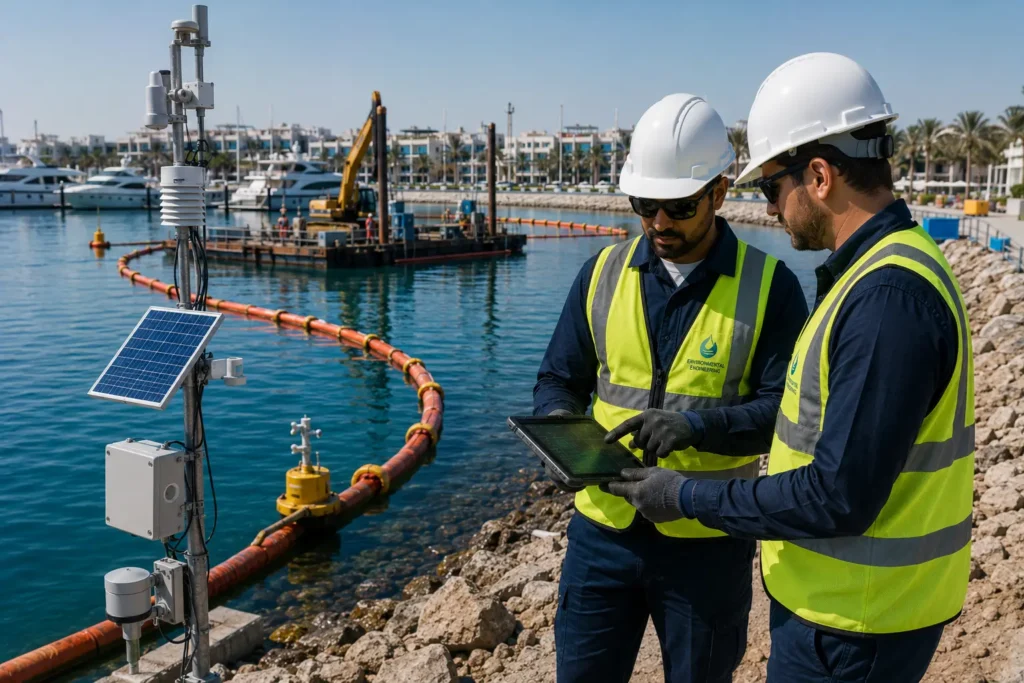
Monitoring System Services
The services below are grouped around the main environmental information a facility needs to operate responsibly. Each item is planned with clear locations, access points, maintenance needs and reporting expectations so the system remains useful after handover.
Water quality monitoring can track conditions such as turbidity, temperature, dissolved oxygen, pH, salinity or other project-specific parameters. These systems help teams observe changes near basins, lagoons, channels, pumpout areas, stormwater points or sensitive water zones.
Air quality monitoring systems support outdoor areas, service zones, waste handling points, fuel areas, plant rooms and public-use spaces where environmental conditions need to be watched. The setup can include fixed stations, sensors, data logging and alert coordination based on the project scope.
Oceanographic monitoring can support projects that need information on water movement, tide levels, currents, wave activity or coastal conditions. This data can help operators understand site behaviour and support planning for access, maintenance and environmental management.
Waste collection solutions help organize bins, smart collection points, service routes and operational planning for public areas, berths, waterfront walkways, resort zones and service facilities. The aim is to make waste handling cleaner, easier to manage and better aligned with daily site use.
Waste disposal and recycling support can include segregation points, collection planning, recycling coordination, handling procedures and operator-friendly layouts. These systems help reduce clutter, improve site cleanliness and support responsible waste management.
Connected Monitoring, Alerts and Maintenance Planning
We help coordinate monitoring locations with site operations, utility routes, access paths, control rooms, reporting requirements and maintenance schedules. This keeps the system easier to inspect, clean, calibrate, service and use for day-to-day decision-making.
- Water quality sensor placement and sampling point coordination
- Air quality station planning for public and service areas
- Oceanographic sensor and data point coordination
- Waste collection routes, bin locations and service access planning
- Recycling and disposal workflow support
- Data logging, alarms, reporting and handover coordination
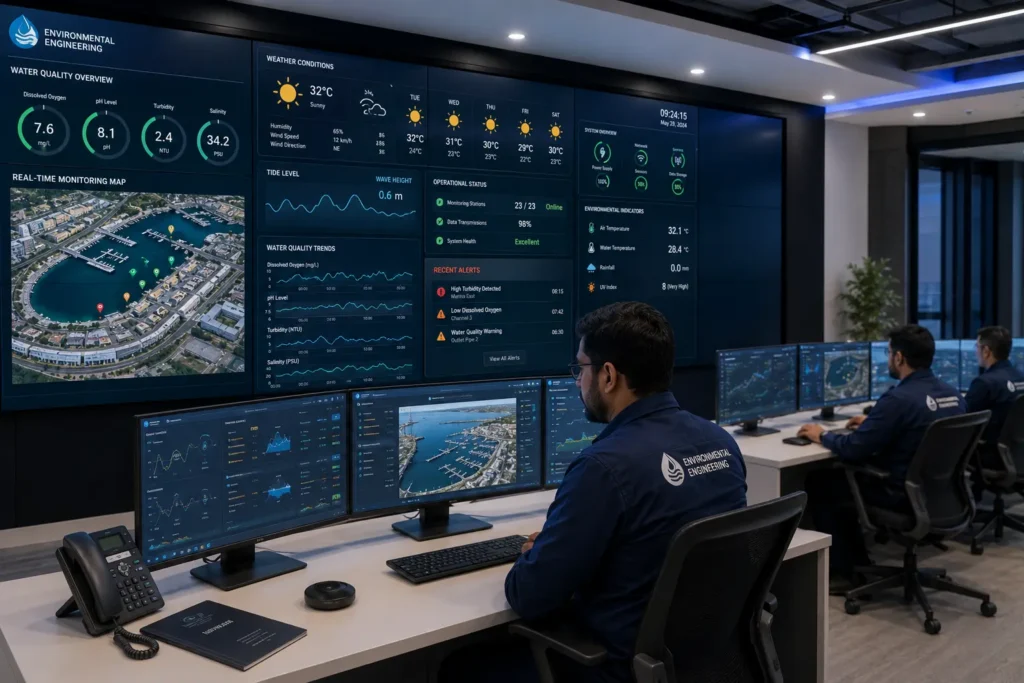
Practical Details That Make Monitoring Systems Work
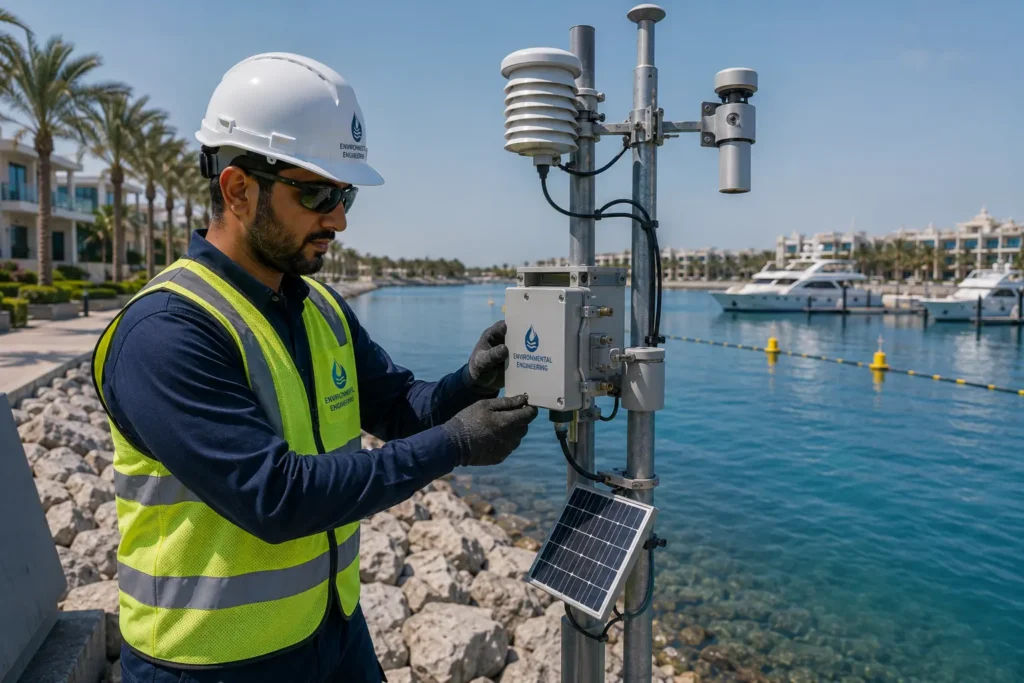
Good environmental monitoring depends on correct placement, stable power, secure mounting, clean access and a clear plan for how data will be reviewed. Equipment should be reachable for maintenance without disrupting the site or blocking public movement. For coastal and outdoor environments, the system also needs to consider heat, humidity, salt exposure, dust, water movement, vandal resistance, communications reliability and safe service access. These details are easier to solve during planning than after equipment has already been installed.
Why Choose Us for Monitoring Systems
Environmental systems work best when equipment, site layout and operating procedures are planned together. We focus on practical monitoring solutions that support real facility management, not just equipment placement.
Clear System Purpose
Each monitoring point is planned around the information the operator needs and the action that may follow.
Site-Focused Layouts
Sensors, bins, access points and equipment routes are coordinated around movement, visibility and maintenance access.
Better Operational Awareness
Water, air, waste and coastal data can help teams respond earlier and manage the site with more confidence.
Outdoor-Ready Planning
We consider exposure, mounting, cables, power, communications and long-term serviceability before installation.
Integrated Environmental Scope
Monitoring, waste collection and recycling support can be coordinated with the wider environmental systems plan.
Simple Handover
We keep documentation, location references, reporting points and maintenance guidance clear for the operating team.
Projects We Support
Monitoring requirements change from one site to another. Some projects need water and air data. Others need waste collection planning, recycling points or ocean condition information. We shape the scope around the site’s real use.
01
Waterfront developments and public promenades
02
Lagoons, lakes, ponds and enclosed water bodies
03
Resort, hospitality and leisure facilities
04
Harbour, berth and marine access zones
05
Environmental management upgrades
06
Waste collection and recycling improvement projects
Service Areas Across Saudi Arabia
Jeddah
Dammam
Al Khobar
Yanbu
Jazan
Tabuk
Red Sea coast
Eastern Province
NEOM region and northwest coast project areas
Other coastal and waterfront locations in Saudi Arabia
What are monitoring systems used for?
Monitoring systems are used to collect useful information about water quality, air quality, ocean conditions, waste activity or recycling needs. The data helps facility teams understand site conditions and plan better maintenance or response actions.
What can water quality monitoring include?
Water quality monitoring may include sensors or sampling points for turbidity, dissolved oxygen, temperature, pH, salinity or other project-specific parameters. The final setup depends on the water body and the information required.
Where are air quality monitoring systems useful?
Air quality systems can be useful near public areas, service zones, waste handling areas, fuel areas, plant rooms and outdoor spaces where environmental conditions need to be observed.
What are oceanographic monitoring systems?
Oceanographic monitoring systems collect information related to coastal or water movement conditions such as currents, tides, waves or water levels. They can support site planning, operations and environmental management.
Can waste collection and recycling be included?
Yes. Waste collection, disposal and recycling solutions can be planned as part of the environmental systems scope, including bin locations, collection routes, segregation points and service access.
How do we start a monitoring systems project?
Start with the site layout, monitoring goals, known environmental issues, operating areas, access points and any available drawings. From there, the scope can be reviewed and the right system approach can be defined.
Monitoring Systems FAQs
Discuss Your Monitoring Requirements
Share your environmental concerns with our team. We can review the requirements and help define the right
next step for water quality, air quality, oceanographic or waste management systems.