
- Mechanical and Plumbing | Storm Drainage System
Storm Drainage Solutions for Waterfront Facilities in Saudi Arabia
Storm drainage systems keep paved areas, service roads, promenades, berth-side zones, parking areas and utility spaces usable when surface water builds up. A well-planned system collects runoff, moves it through the right pipework, provides inspection access, and uses lift stations where gravity flow is not enough. Our work covers storm drainage piping, drainage gullies, precast manholes, lift stations and lift station pumps for projects that need controlled water movement, cleaner access routes and easier maintenance. The scope is planned around levels, flow direction, site use, equipment access, material selection and long-term operation in exposed outdoor conditions.
Storm Drainage Planning for Safe Site Operation
Stormwater is not only a civil detail. If it is not collected and routed properly, it can affect walkways, roads, plant areas, equipment rooms, landscaped zones, utility corridors and public access. Good drainage planning protects the way the site functions after handover. We help coordinate drainage routes with paving levels, pipe runs, gullies, manholes, pump chambers, lift stations and discharge points. The goal is to create a system that is practical to install, easier to inspect and suitable for the way the facility will be used every day.For coastal and waterfront projects, drainage also needs careful attention to corrosion exposure, sediment movement, access covers, maintenance vehicles, pump reliability and the connection between surface collection and underground networks.

Our Storm Drainage Services
Drainage design starts by understanding where water lands, where it must be collected, and how it will leave the site. The services below cover the main components that turn that route into a working storm drainage network.
Storm drainage piping for surface water collection, underground routing and controlled discharge. We support pipe route planning, material coordination, trench interfaces, connection points and maintainable layouts for roads, walkways, service yards and open paved areas.
Drainage gullies collect surface water at practical points before it reaches pipework or underground channels. Placement should match grading, traffic movement, pedestrian routes, paved slopes and areas where water naturally gathers during rainfall or washdown.
Precast manholes provide inspection and access points for storm drainage networks. They support maintenance, route changes, junctions, level transitions and safer inspection access when placed correctly within the drainage layout.
Stormwater lift stations are used where water needs to be pumped from a lower collection point to a higher discharge level or controlled outlet. They are planned around inflow, pump duty, chamber access, electrical coordination and maintenance needs.
Lift station pumps support reliable water movement where gravity flow is limited. Pump selection should consider expected flow, head requirement, standby needs, controls, access for servicing and protection against blockage or excessive wear.
Built Around Collection, Routing and Pumping
A strong drainage network follows a clear path from the surface to the final discharge or connection point. Gullies collect water, piping carries it, manholes provide access, and lift stations move water where levels make gravity flow difficult. We plan these elements together so the finished system can be inspected, cleaned and operated without unnecessary disruption. Good coordination also helps avoid awkward pipe clashes, poor access cover locations, undersized pump chambers or routes that become difficult to maintain later.
- Stormwater collection and pipe routing support
- Gully placement around roads, walkways and paved zones
- Precast manhole coordination for inspection access
- Lift station and pump chamber planning
- Pump duty, controls and maintenance access review
- Testing, inspection and handover support
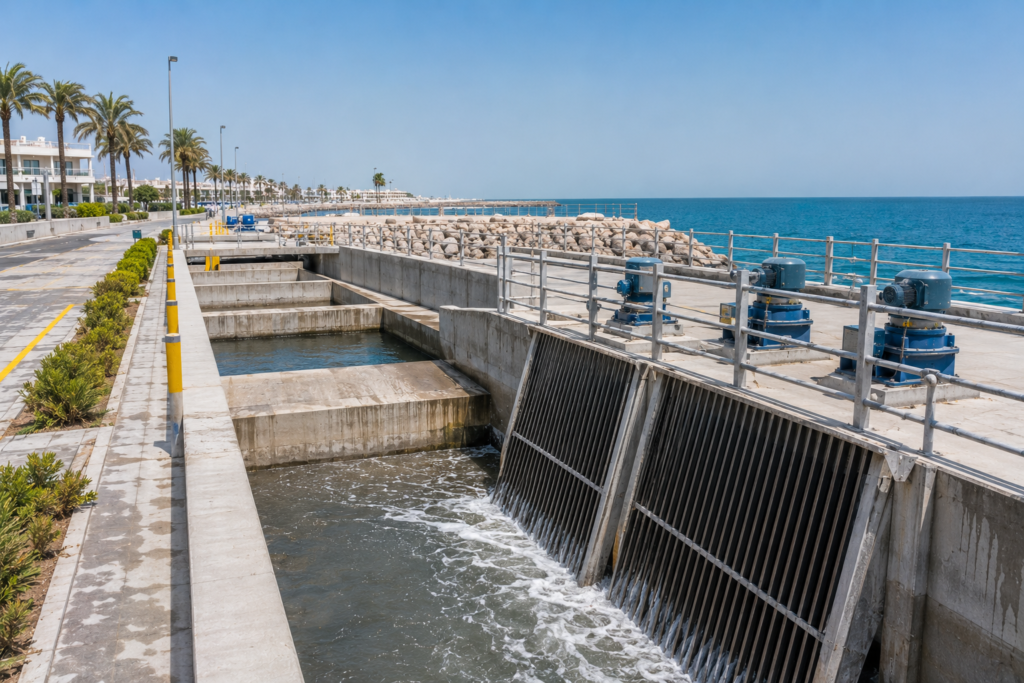
Pipe Routes, Access Points and Pumping Details
Storm drainage performance depends on many small details working together. Pipe gradient, invert levels, chamber positions, gully spacing, cover loading, pump access, discharge routing and maintenance clearance all affect the final system. The route must also respond to how the site is used. A promenade, service road, parking area, utility zone and landscaped public space do not need the same collection approach. The system should collect water without blocking movement, creating trip points or making future inspection difficult.
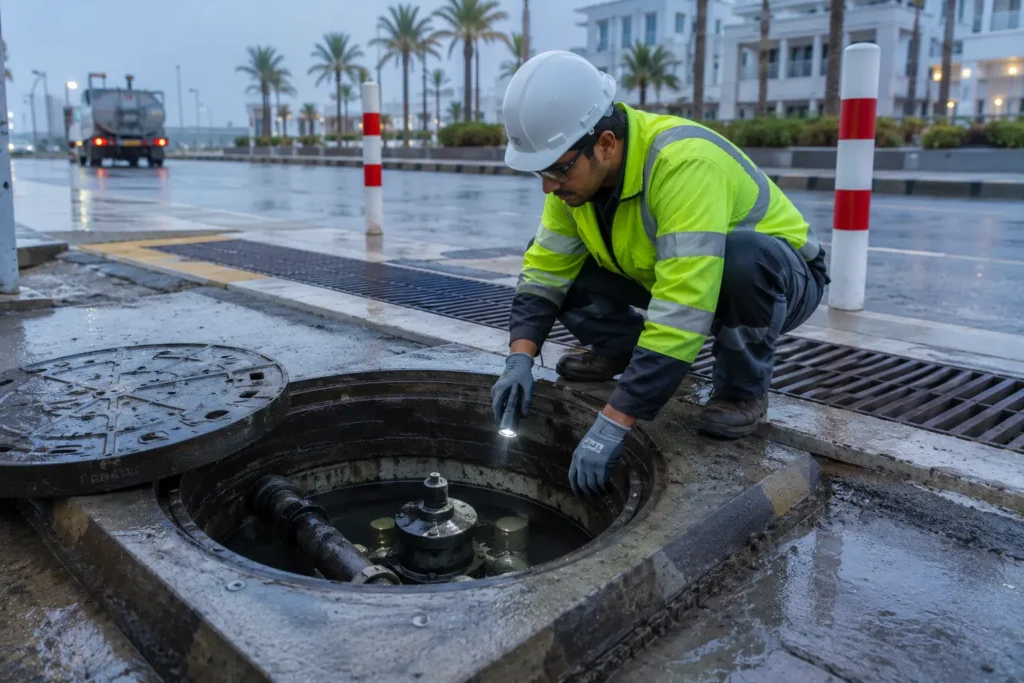
Why Choose Us for Storm Drainage
Solutions in Saudi Arabia
You need drainage work that looks simple on the surface but is planned properly below it. We focus on flow direction, access, equipment reliability and maintenance from the start, so the system supports the site instead of creating problems after handover.
Surface Water Focus
We plan drainage around real water movement, paved slopes, access routes, operational zones and areas where runoff can affect daily use.
Coordinated Network Planning
Pipes, gullies, manholes, lift stations and pumps are treated as one connected network, not separate items installed one by one.
Maintainable Access
Manhole covers, pump chambers, gullies and pipe routes are positioned with inspection, cleaning and service access in mind.
Material and Site Fit
Pipe, chamber and cover selections are considered against site exposure, load conditions, installation method and project requirements.
Clear Handover Flow
We keep the scope organized from planning to installation support, testing, documentation and final handover.
Practical Pumping Support
Lift stations and pumps are planned around flow demand, chamber layout, controls, standby needs and long-term service requirements.
Storm Drainage Projects We Support
Each site handles stormwater differently. Some need basic surface collection, while others need pump-assisted discharge, larger pipe networks or multiple access points across busy outdoor areas. We adjust the scope around the site layout and operating needs.
01
Waterfront promenades and public access areas
02
Marina service roads, berth-side zones and paved yards
03
Resort, hospitality and coastal development areas
04
Parking areas, loading routes and utility corridors
05
Pump-assisted drainage networks and low-level collection points
06
Upgrade, replacement and expansion works for existing drainage systems
Service Areas Across Saudi Arabia
We support jetty construction and marine works across Saudi Arabia. Project coverage can include coastal developments, resort destinations, waterfront communities, port-adjacent facilities, and private marine sites.
Jeddah
Dammam
Al Khobar
Yanbu
Jazan
Tabuk
Red Sea coast
Eastern Province
NEOM region and northwest coast project areas
Other coastal and waterfront locations in Saudi Arabia
What is included in storm drainage solutions?
Storm drainage solutions can include piping, drainage gullies, precast manholes, lift stations, lift station pumps, access covers, route coordination, testing support and handover documentation. The final scope depends on site levels, drainage demand and project requirements.
Why are storm drainage gullies important?
Storm drainage gullies collect surface water from roads, walkways, paved areas and service zones before it reaches the underground pipe network. Correct placement helps reduce standing water and improves site usability after rainfall or washdown.
When is a lift station needed?
A lift station may be needed when stormwater cannot move by gravity to the discharge point or connection level. It helps pump collected water from lower areas to a higher outlet or controlled drainage route.
What are lift station pumps used for?
Lift station pumps move stormwater from collection chambers or low-level drainage points. Pump selection should consider flow, head, control system, access, maintenance and standby requirements where needed.
Do you provide precast manholes?
Yes. Precast manholes can be included as inspection, junction and maintenance access points within the storm drainage network. Their location should match pipe routes, levels and service access needs.
Can storm drainage be upgraded on an existing site?
Yes. Existing drainage networks can often be reviewed for better collection, improved access, additional gullies, new pipe routes or pump-assisted discharge. The right approach depends on the existing layout and site conditions.
Which areas in Saudi Arabia do you serve?
Storm drainage works can be supported across Saudi Arabia, including Jeddah, Dammam, Al Khobar, Jubail, Yanbu, Tabuk, the Red Sea coast, Eastern Province and other project locations.
How do we start a storm drainage project?
Start with the project location, site layout, levels, drainage routes, required services and timeline. From there, the scope can be reviewed and the next step can be a technical discussion or site assessment.
Storm Drainage Solutions FAQs
Start Your Drainage Scope With Clear Site Levels
Send your layout, site levels, drainage routes and required scope.
We can review the details and help plan the next step.