
- MECHANICAL AND PLUMBING | Fuel System
Fuel Systems for Waterfront Facilities in Saudi Arabia
Fuel systems support safe storage, controlled transfer and reliable dispensing for service docks, maintenance yards, equipment areas, support vehicles and operating zones that need organized access to fuel. A good system keeps tanks, pumps, valves, meters, hoses, filling points and monitoring equipment easy to use, inspect and maintain. Fuel systems for coastal facilities need safe storage, controlled dispensing, reliable pumping, clean filling points, and clear access for operators. From fuel tanks and dispensers to loading arms, valves, flow meters and leak detection, each part must be planned around safety, daily use and long-term maintenance.
Fuel Infrastructure for Service Areas and Operational Sites
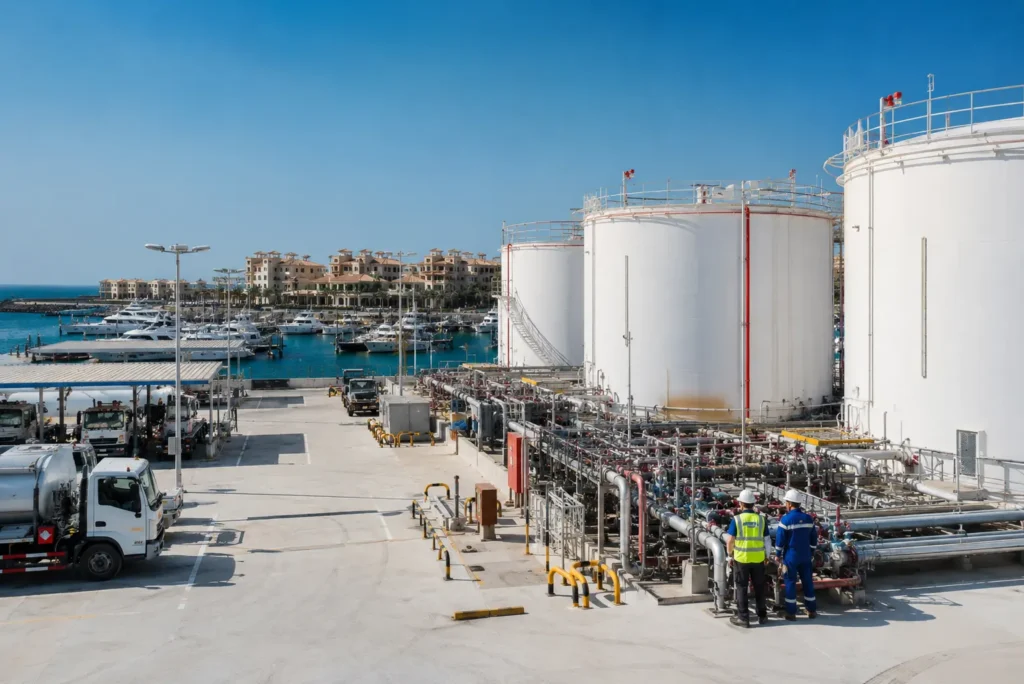
Fuel infrastructure needs clear planning before equipment is selected. Storage areas, transfer routes, filling points and dispenser locations must work with site circulation, maintenance access, emergency access and daily operating routines. We support fuel system works for waterfront developments, service yards, harbour support areas, maintenance zones, fleet and equipment areas, and specialized fuel distribution scopes where controlled storage and dispensing are required. The aim is to create a clean, safe and serviceable layout that supports operations without creating unnecessary congestion or maintenance difficulty.
Our Fuel System Services
Fuel systems work best when storage, transfer, dispensing and monitoring are planned together. The services below cover the main components needed to move fuel from storage to controlled points of use while keeping access, isolation, containment, flow measurement and maintenance in view.
Fuel stations and filling points for service areas, vessel support zones, maintenance yards and equipment operations. We coordinate dispenser locations, hose reach, vehicle access, protective layout, power supply and practical user movement.
Fuel storage tank support with concrete chambers where required for protection, access and site coordination. Tank areas should be planned around capacity, inspection access, pipe entry, containment, ventilation needs and future maintenance.
Fuel pumps, fuel hoses, flow meters and valves for controlled transfer and distribution. These components help operators manage flow, isolate sections, monitor use and keep the system easier to service.
High-flow and conventional dispensers for different operating needs, from routine equipment fueling to larger transfer demands. Each dispenser setup should match the expected flow rate, access method, metering needs and site safety plan.
Fuel hydrants, loading arms and lorry filling solutions for structured fuel transfer points. We help coordinate access, route planning, hose or arm movement, valves, metering and operator clearance.
Tank gauging, leak detection solutions, fuel kiosks and dispenser canopies for monitoring, user control and site protection. These elements help improve visibility, equipment protection, operator access and system oversight.
Built Around Storage, Transfer and Daily Operation
A fuel system should be easy to operate without being hard to maintain. Tank areas, dispenser islands, filling points, pipe routes and access covers all need enough space for inspection, cleaning, testing and future replacement work. We coordinate the practical parts of the system before installation begins, including tanker approach, chamber access, pump locations, hose movement, valve positions, metering points, kiosk placement and the route between storage and dispensing areas.
- Fuel station and dispenser layout review
- Tank, chamber and filling point coordination
- Pump, hose, valve and flow meter planning
- Hydrant, loading arm and lorry filling support
- Tank gauging and leak detection coordination
- Testing, labelling and handover documentation support
Storage, Piping and Safety Coordination Details
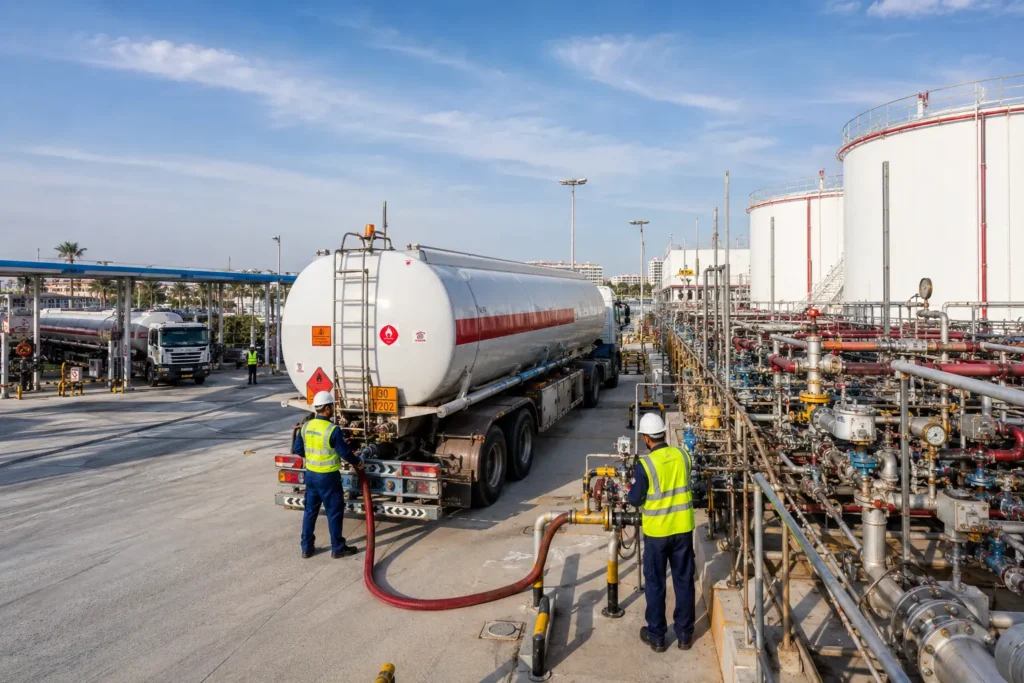
Fuel systems depend on more than tanks and dispensers. Pipe routes, valve pits, chambers, pumps, meters, hoses, fittings, access covers, grounding needs, signage, spill control planning and service clearances all affect how the system performs. The installation should be reviewed around the actual site layout. Fuel transfer areas need suitable access for users and service teams. Storage zones need planned inspection routes. Dispenser locations need enough clearance for movement, protection and routine maintenance. Where the project includes specialized fuel hydrants, aviation fuel solutions or higher-flow transfer systems, the scope should be confirmed with the project consultant and relevant authority before final technical claims are published or work begins.
Why Choose Us for Fuel Systems
in Saudi Arabia
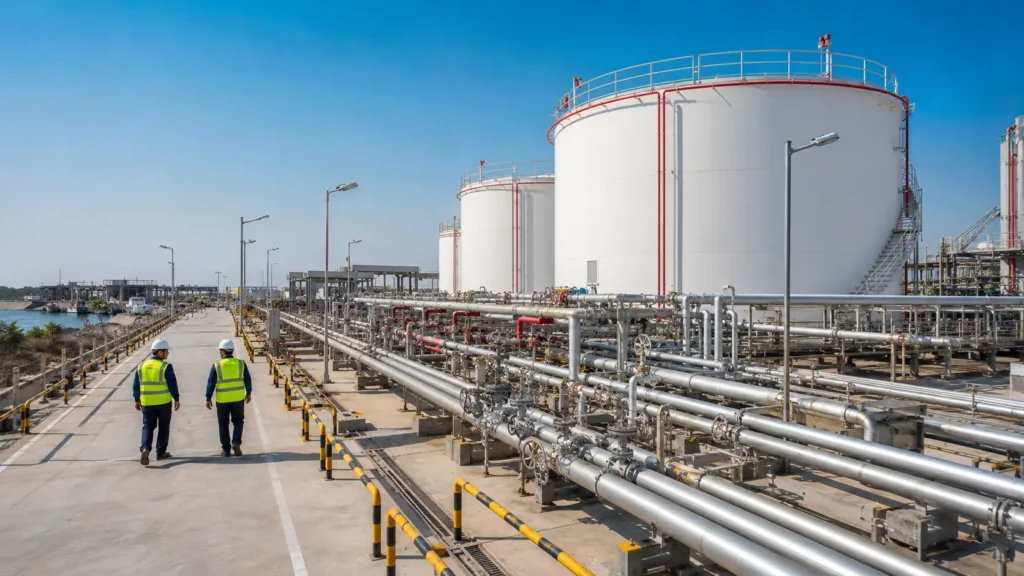
You need a team that understands how storage, transfer, dispensing and monitoring affect daily operation.
We focus on practical layouts, accessible components and clear coordination
so the system can be used and maintained with less confusion after handover.
Operational Layout Thinking
Fuel stations, filling points, dispensers and tank areas are planned around real movement, access and service requirements.
Coordinated System Scope
Tanks, chambers, pumps, valves, flow meters, hoses, dispensers and monitoring systems are treated as connected parts of one fuel package.
Access and Maintenance Focus
We consider inspection routes, chamber access, hose movement, valve reach, equipment clearance and future service needs early in the planning stage.
Support for Different Fuel Uses
The scope can support vessel service areas, equipment yards, maintenance facilities, vehicle fueling points and specialized transfer requirements.
Monitoring and Protection Details
Tank gauging, leak detection, canopies, kiosks and protective layouts are coordinated to improve oversight and day-to-day usability.
Clear Handover Support
We keep drawings, testing requirements, equipment interfaces and handover documents in view so the project can move forward cleanly.
Fuel System Projects We Support
Fuel requirements change from site to site. Some projects need a compact dispenser point. Others need storage tanks, loading arms, hydrant connections, tank monitoring or a full fuel station layout. We adjust the scope around the operating need and available space.
01
Service docks and harbour support areas
02
Waterfront maintenance and equipment yards
03
Resort, tourism and facility support zones
04
Fuel storage and controlled dispensing areas
05
Lorry filling and fuel transfer points
06
Upgrade, replacement and expansion works
Service Areas Across Saudi Arabia
We support jetty construction and marine works across Saudi Arabia. Project coverage can include coastal developments, resort destinations, waterfront communities, port-adjacent facilities, and private marine sites.
Jeddah
Dammam
Al Khobar
Yanbu
Jazan
Tabuk
Red Sea coast
Eastern Province
NEOM region and northwest coast project areas
Other coastal and waterfront locations in Saudi Arabia
What is included in a fuel system scope?
A fuel system scope can include fuel stations, storage tanks, concrete chambers, dispensers, pumps, filling points, hoses, flow meters, valves, loading arms, tank gauging, leak detection, kiosks, canopies, testing and handover support.
Do you provide fuel stations for service areas?
Yes. Fuel stations can be planned for controlled dispensing in service areas, maintenance yards, equipment zones and operating facilities. The layout should consider access, protection, dispenser location, hose reach and maintenance clearance.
Can fuel storage tanks and concrete chambers be included?
Yes. Fuel storage tanks and concrete chambers can be included where the project requires protected storage, inspection access, pipe entry coordination and a structured installation area.
Do you support fuel dispensers, pumps and flow meters?
Yes. High-flow dispensers, conventional dispensers, fuel pumps, flow meters, hoses and valves can be coordinated as part of the wider fuel transfer and dispensing package.
What are lorry filling solutions and loading arms used for?
Lorry filling solutions and loading arms help create controlled fuel transfer points for tanker or service vehicle operations. The design should match the site layout, access method, flow requirement and operator safety plan.
Can tank gauging and leak detection be included?
Yes. Tank gauging and leak detection solutions can be included to support monitoring, oversight and maintenance planning. The final system should match the project requirements and consultant specifications.
Do you provide aviation fuel solutions and hydrants?
Specialized fuel hydrant or aviation fuel scopes can be supported where required by the project. Technical requirements, approvals and operating standards should be confirmed by the project consultant and relevant authority.
How do we start a fuel system project?
Start with the site layout, drawings, fuel type, required storage, dispenser needs, filling point locations, transfer requirements and target timeline. From there, the scope can be reviewed and the right next step can be defined.
Fuel System FAQs
Start Your Fuel System Scope
Share your drawings, site layout, tank requirements, dispenser needs and target timeline.
We can review the scope and help define the next step.