
- Mechanical and Plumbing | Fire Fighting System
Fire Fighting Systems in Saudi Arabia
Fire fighting systems help protect service buildings, pump rooms, utility corridors, berth areas, waterfront walkways, maintenance zones and connected support facilities where fast access to water, suppression equipment and response points is essential. A reliable system is planned around site risk, user movement, operating access and long-term maintenance, not only around equipment supply. Our scope covers fire water systems, sprinklers, deluge systems, foam suppression, clean agent systems, fire pumps, hydrants, cabinets, extinguishers, valve pits, piping solutions and manhole covers. Each element is coordinated with the project layout, authority requirements, civil works, electrical interfaces, water supply, drainage routes and final handover needs.
Fire Protection Planning for Mechanical, Plumbing and Waterfront Projects
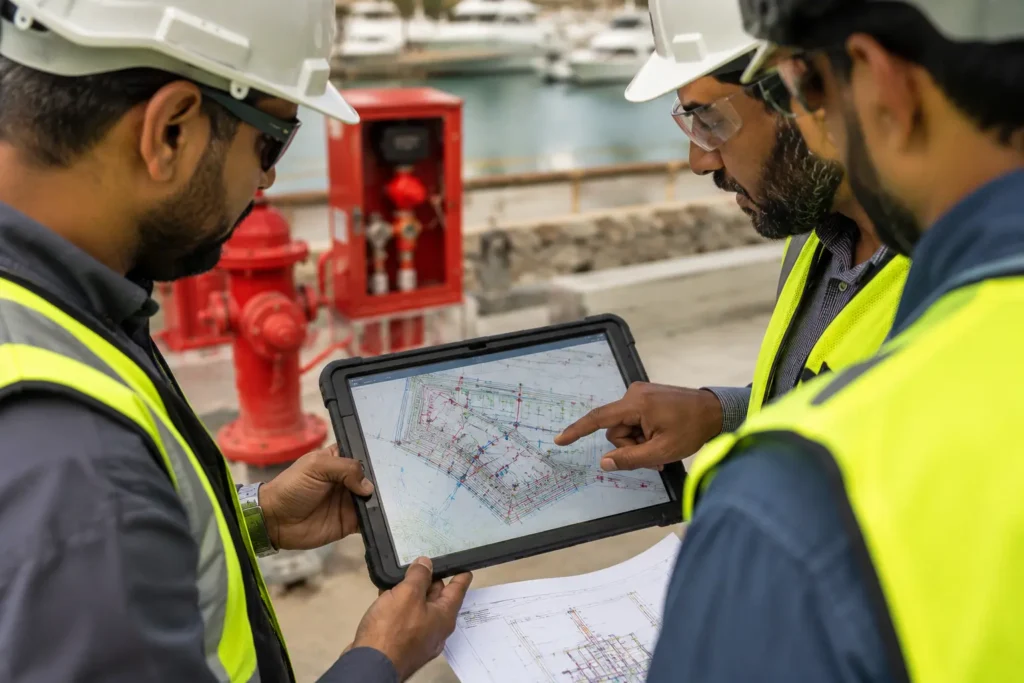
Fire protection works need to be planned early because they affect piping routes, pump locations, valve access, cabinet placement, service roads, equipment rooms and inspection points. When this coordination is delayed, the site can end up with difficult maintenance access, exposed routes, poor cabinet locations or unnecessary rework. We support project teams with practical fire fighting system planning and installation support for waterfront developments, marine service areas, resorts, public spaces, harbour zones and supporting buildings. The aim is to create a system that is visible where needed, protected where exposed, and clear for operators after handover.
Our Fire Fighting System Services
The services below are grouped around the main fire protection elements that usually need close coordination on site: water supply, suppression method, cabinet locations, hydrant access, valve control, piping routes and inspection covers. Each part is planned so the final system is easier to test, operate and maintain.
Fire water systems form the main supply network for hydrants, cabinets, sprinklers, deluge systems and other protection points. We support fire pump coordination, pipe routing, suction and discharge connections, valve access, testing points and practical maintenance space so the system can serve the intended risk zones properly.
Sprinkler systems support building and covered-area protection, while deluge systems are used where rapid water discharge may be required for higher-risk areas. These systems need correct zoning, control valves, piping routes, drainage awareness, alarm interfaces and clear testing access.
Foam fire suppression and clean agent systems can be considered for selected equipment areas, fuel-related zones, electrical rooms or sensitive spaces depending on the project design. We coordinate these systems around risk type, enclosure condition, discharge coverage, safety requirements and consultant-approved specifications.
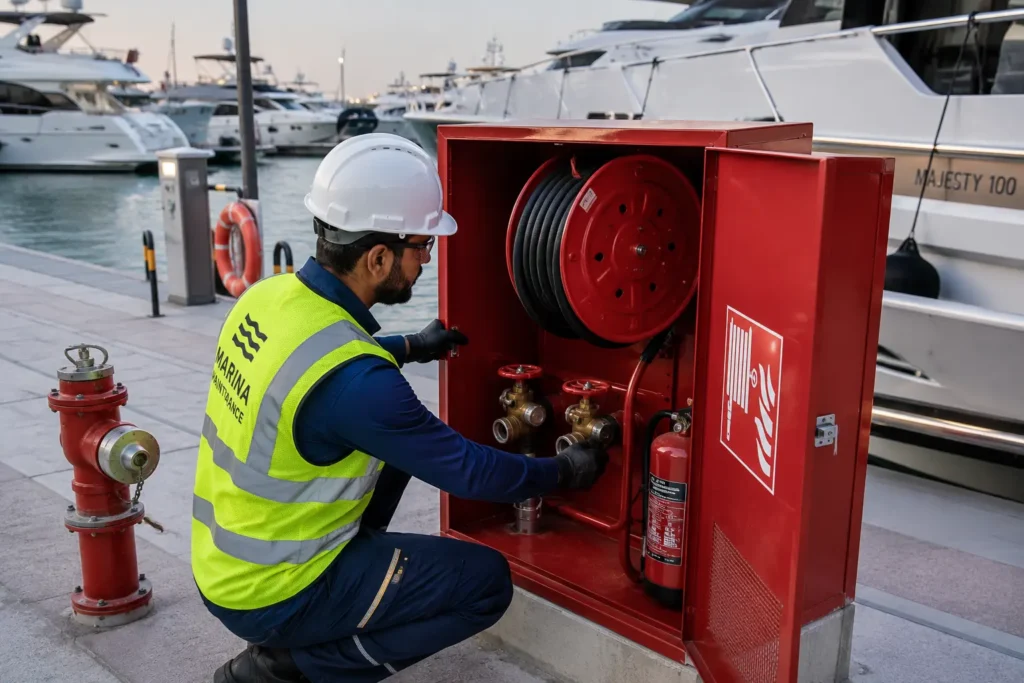
Fire extinguishers, hose cabinets and SOS cabinets provide visible response points for operators, staff and users. Placement should support walking routes, berth access, service buildings, public areas and emergency movement without blocking circulation or creating visual clutter.
Hydrants, valve pits and manhole covers must be placed where crews can reach them quickly and maintenance teams can inspect them safely. We support coordination around road access, quay edges, landscaped areas, pedestrian movement, underground piping and cover load requirements.
Fire piping solutions connect pumps, valves, cabinets, hydrants and suppression systems into one working network. We focus on route planning, supports, corrosion exposure, isolation points, identification, pressure testing coordination and clean integration with civil and MEP works.
Fire Water, Cabinets and Access Points Built for Daily Operation
A fire fighting layout should be easy to understand when the site is under pressure. Cabinets must be visible. Hydrants must be reachable. Valve pits and manholes must be accessible. Pump rooms must allow safe service access. Piping should follow a route that can be inspected and maintained without disrupting normal operation. We help coordinate the system around how people move through the site, how service teams reach equipment, and how the fire water network connects with buildings, utility zones, dockside areas and outdoor routes.
- Fire water network and pump coordination
- Sprinkler, deluge, foam and clean agent interface planning
- Cabinet, hydrant, valve pit and manhole placement support
- Piping route review with civil and MEP teams
- Access, visibility and maintenance clearance planning
- Testing, inspection and handover document support
Piping, Pumps and Suppression Details That Matter
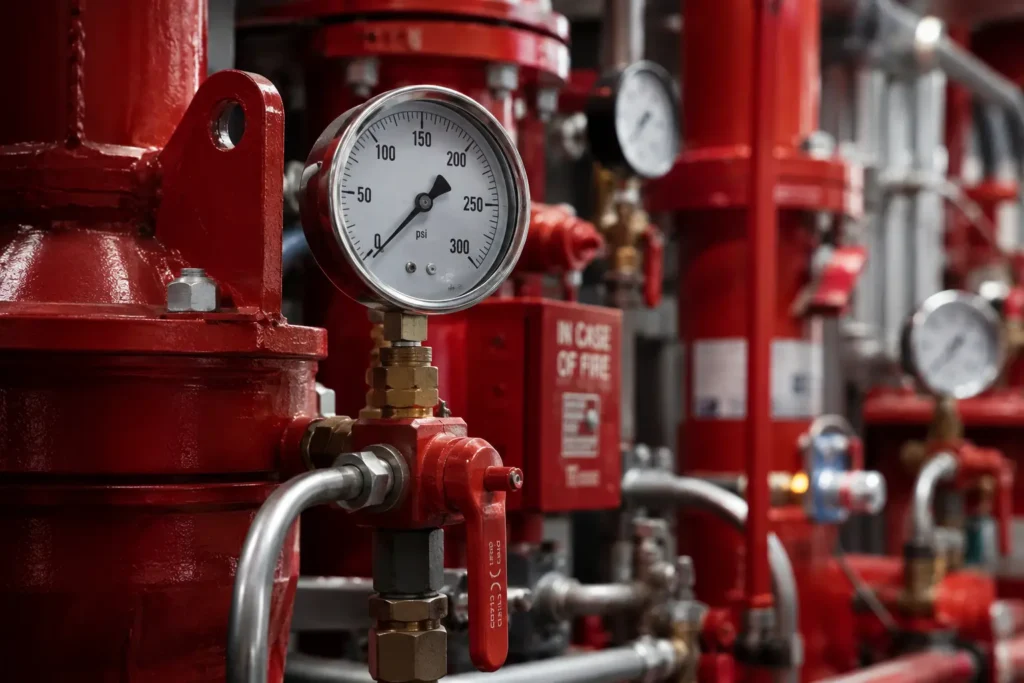
Fire fighting work depends on details that are often hidden once construction is complete. Pipe routing, valve locations, pump access, pressure zones, cabinet fixing, underground crossings, sleeves, supports, corrosion protection and manhole cover selection all affect long-term usability. For outdoor and coastal environments, the system must also respond to exposure, drainage, access routes, public movement and coordination with other services. We keep these details visible during planning so installation can move with fewer conflicts and the final system is easier to manage.
Why Choose Us for Fire Fighting Systems
in Saudi Arabia
You need a fire fighting system partner who understands more than equipment lists. The system must be accessible,
coordinated, serviceable and suitable for the way the site will be used after handover.
Practical System Planning
We look at risk areas, access routes, service points, pump locations and operating needs before installation details are finalized.
Complete Fire Protection Scope
Fire water systems, pumps, sprinklers, deluge, foam, clean agent systems, extinguishers, cabinets, hydrants and piping can be coordinated as one package.
Clear Site Coordination
Fire protection routes are aligned with civil works, MEP layouts, utility corridors, outdoor areas and future maintenance requirements.
Visible Response Points
Cabinets, hydrants, extinguishers and SOS points are planned around movement, visibility, access and emergency response needs.
Built for Outdoor Conditions
We consider weather exposure, corrosion risk, drainage, pipe protection, valve access and durable installation details.
Handover Focus
Testing support, labelling, inspection coordination and documentation are kept clear so the project can move toward operation smoothly.
Fire Fighting Projects We Support
Every development has a different fire protection requirement. Some areas need a strong fire water network,
others need cabinets, hydrants, clean agent protection or pump room coordination.
We adjust the scope around the real use of the site.
01
Waterfront developments and marine service areas
02
Resort, tourism and hospitality facilities
03
Service buildings, pump rooms and utility zones
04
Berth areas, walkways and public-use routes
05
Harbour, port-adjacent and maintenance facilities
06
Upgrade, replacement and expansion works
Service Areas Across Saudi Arabia
We support jetty construction and marine works across Saudi Arabia. Project coverage can include coastal developments,
resort destinations, waterfront communities, port-adjacent facilities, and private marine sites.
Jeddah
Dammam
Al Khobar
Yanbu
Jazan
Tabuk
Red Sea coast
Eastern Province
NEOM region and northwest coast project areas
Other coastal and waterfront locations in Saudi Arabia
What is included in a fire fighting system?
A fire fighting system can include fire water piping, fire pumps, sprinklers, deluge systems, foam suppression, clean agent systems, fire extinguishers, hose cabinets, SOS cabinets, hydrants, valve pits, manhole covers, testing support and handover documentation.
What is a fire water system used for?
A fire water system supplies water to protection points such as hydrants, hose cabinets, sprinklers, deluge systems and other equipment. The final arrangement depends on the project design, pump requirements and authority-approved layout.
Do you provide sprinkler and deluge systems?
Yes. Sprinkler and deluge systems can be coordinated for building areas, covered spaces, high-risk zones or project-specific protection needs. The design should be reviewed by the project consultant and relevant authority.
Can foam or clean agent systems be included?
Yes. Foam fire suppression and clean agent systems can be included where the risk type and project design require them. The correct system depends on the protected area, equipment type, enclosure condition and approved specifications.
Do you install fire extinguishers and hose cabinets?
Yes. Fire extinguishers, hose cabinets and SOS cabinets can be positioned around service areas, access routes, public zones and operational spaces where visible response points are needed.
What are valve pits and manhole covers used for?
Valve pits and manhole covers provide controlled access to underground valves, piping routes and inspection points. They should be coordinated with access routes, surface finishes, drainage and maintenance requirements.
Do fire fighting systems need testing before handover?
Fire fighting systems normally require testing, inspection coordination and documentation before handover. The exact process depends on the project specification, consultant requirements and applicable authority approvals.
How do we start a fire fighting system project?
Start with the site layout, fire protection drawings, required systems, utility routes, pump room details and project timeline. From there, the scope can be reviewed and the right next step can be defined.
Fire Fighting System FAQs
Start With a Clear Fire Fighting Scope
Share your project drawings, site layout, required systems and target timeline.
We can review the scope and help define the next step.