
- Electrical | Cable Containment Solutions
Cable Containment Solutions for Marina and Waterfront Projects in Saudi Arabia
The correct system depends on cable type, route length, load, exposure, installation access, corrosion risk, and future maintenance needs.Organize, protect, and route power, control, lighting, communications, and low-current cables across waterfront facilities with practical cable containment systems built for coastal use, service access, and clean installation.For berth areas, electrical rooms, service corridors, lighting routes, pedestal feeds, CCTV networks, and shore-side equipment, cable routes need to be planned before the site becomes crowded. A good containment layout keeps cables protected, easier to identify, and simpler to maintain after handover.
Organized Cable Routes for Waterfront Electrical Systems
Cable containment is one of those details that can quietly decide how clean and serviceable an electrical installation becomes. When power cables, lighting circuits, control wiring, CCTV, access control, and communication routes all pass through the same project zones, weak planning can quickly lead to messy routes, difficult pulling, and poor maintenance access. We support cable containment works for marina and waterfront developments across Saudi Arabia where equipment rooms, quay edges, pontoons, walkways, service buildings, parking areas, and outdoor utility zones need safe cable routing. The focus is simple: create organized paths that protect the cables, suit the environment, and keep future inspections practical.
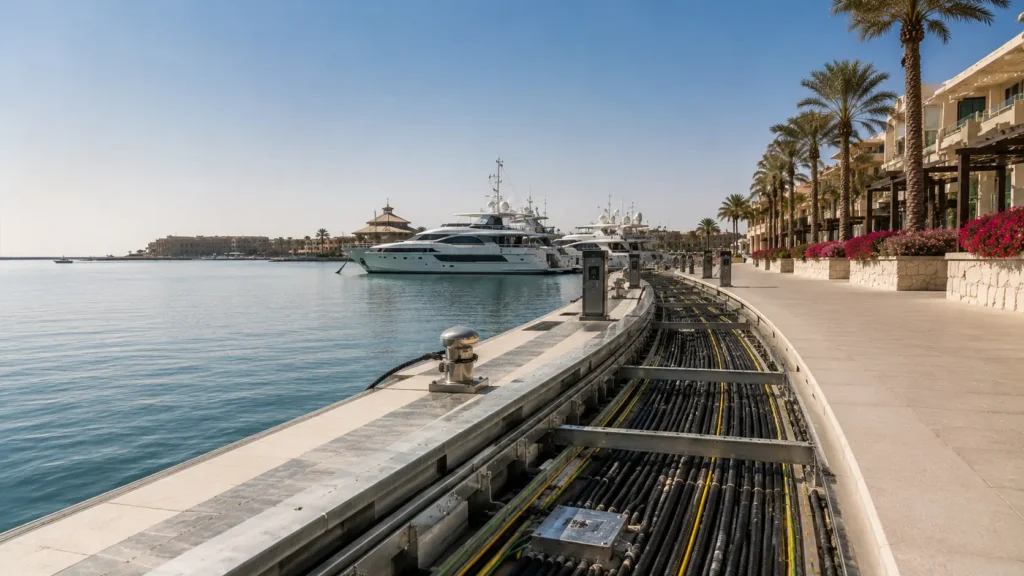
Our Cable Containment Services
The main containment items used to route and protect cables from distribution rooms to service zones, lighting poles, equipment cabinets, pedestals, pumps, security systems, and other site loads. Each item has a clear role in keeping the installation safer, neater, and easier to maintain.
Cable trays and ladders provide open, accessible routes for power, control, and communication cables. Material options can include HDG, stainless steel, aluminium, and GRP, depending on exposure, cable weight, corrosion risk, and the level of support needed along the route.
Ducts, conduits, and raceways protect cable runs where enclosed routing is required. They are useful for lighting feeds, low-current systems, equipment connections, outdoor crossings, wall penetrations, and areas where cables need a cleaner protected path.
Cable ties, glands, lugs, heat-shrink tubes, sleeves, markers, labels, and fixing materials help complete the installation properly. These small items matter because they affect cable identification, sealing, termination quality, and day-to-day serviceability.
Cable joints and sleeves support safe cable extension, repair, protection, and connection works where routes continue between sections or equipment. Proper jointing and sleeve selection help reduce weak points and keep cable systems easier to inspect.
Cable pulling machines, rollers, accessories, and suitable compounds help control cable installation through trays, ducts, conduits, and longer routes. Good pulling support reduces stress on cables and helps avoid damage during installation.
Cable cleats, ramps, covers, and protection accessories help secure and protect cable routes in service corridors, equipment zones, crossing points, and temporary access areas. They are especially useful where movement, vibration, or foot traffic may affect exposed routes.
Reliable Routes for Power, Controls and Low-Current Systems
Every cable route should have a clear purpose. Main feeders may need stronger ladder support. Lighting and control routes may work better through trays, conduits, or raceways. CCTV, access control, communications, and smart systems often need clean separation and easy identification. We help plan cable routes so pulling, glanding, termination, labelling, inspection, and future additions are easier to manage. This is important in waterfront facilities where service corridors, electrical rooms, walkways, utility points, and outdoor areas all need to work together without creating clutter or unsafe crossings.
- Tray, ladder, duct, conduit and raceway coordination
- HDG, stainless steel, aluminium and GRP material options
- Cable glands, lugs, ties, sleeves and heat-shrink support
- Cable pulling equipment, rollers and compound planning
- Cable cleats, ramps, covers and route protection accessories
- Support for power, lighting, control, communication and low-current routes
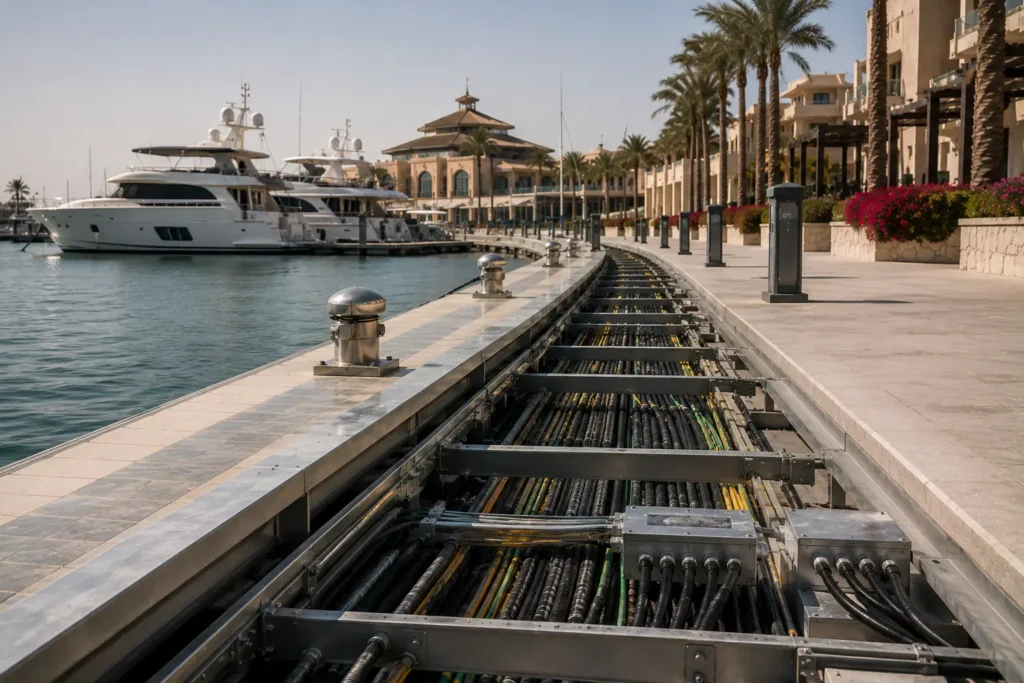
Material Selection, Access and Installation Details
Containment material should match the environment. HDG systems can suit many heavy-duty areas. Stainless steel may be considered where corrosion resistance is a major concern. Aluminium can help where a lighter installation is preferred. GRP may be suitable for selected harsh or corrosive locations when specified by the project team. The route itself is just as important as the material. Cable trays, ladders, ducts, conduits, and raceways should allow safe pulling, correct bending, proper support, route protection, and maintenance access. Fixings, covers, glands, lugs, cleats, labels, and fire-stopping interfaces should be considered as part of the same system, not left for the end of the project.
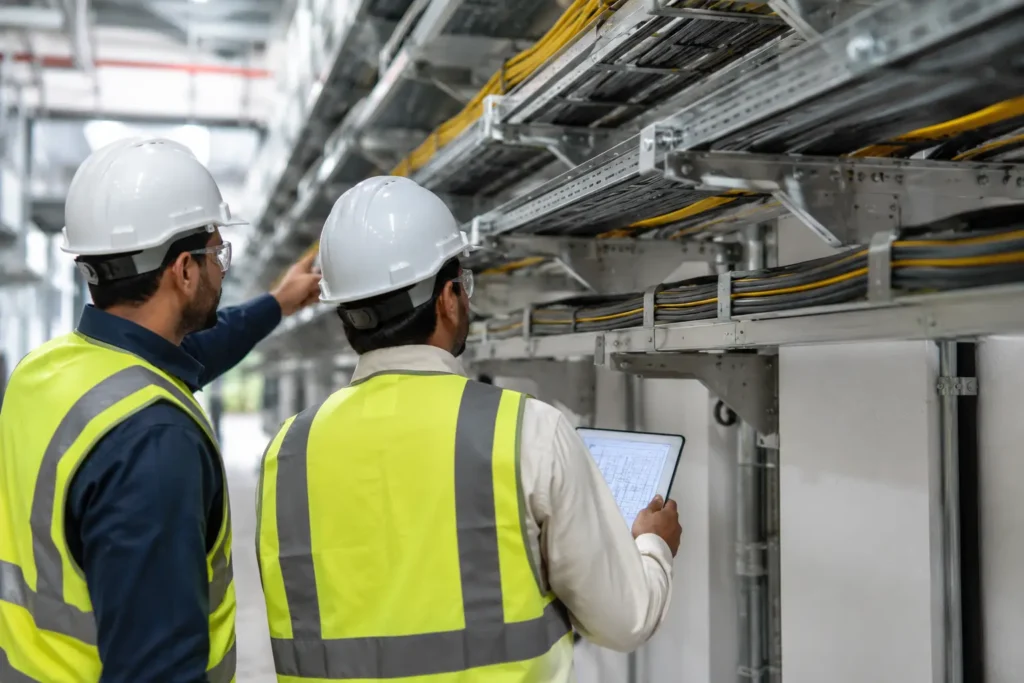
Why Choose Us for Cable Containment
Solutions in Saudi Arabia
Cable containment affects installation quality, safety, access and long-term maintenance. We plan the route before the site becomes crowded with multiple trades, so the final installation stays cleaner and easier to manage.
Correct System Selection
Trays, ladders, conduits, raceways and accessories are selected around the cable load, route, environment and access needs.
Clean Routing and Access
Good containment makes cables easier to pull, inspect, test, label, maintain and expand over time.
Materials for Coastal Conditions
HDG, stainless steel, aluminium and GRP options can be reviewed based on corrosion exposure, weight and site conditions.
Support for Multiple Cable Types
We support routes for power, lighting, control, CCTV, access control, communications and other low-current systems.
Coordination With Project Teams
Openings, supports, clearances, equipment locations and route changes are coordinated before installation becomes difficult.
Saudi Arabia Coverage
We support waterfront, electrical and infrastructure works across major coastal and inland project locations in Saudi Arabia.
Projects We Support
Cable containment should be planned around the project environment, the cable type and the way the site will operate after handover. We adjust the scope to suit permanent infrastructure, service upgrades and new-build waterfront projects.
01
Marinas, waterfront developments and berth service areas
02
Electrical rooms, substations and utility buildings
03
Lighting, CCTV, access control and low-current routes
04
Pump rooms, service corridors and equipment zones
05
Parking areas, access roads and outdoor service routes
06
Temporary and permanent site power routes
Service Areas Across Saudi Arabia
We support jetty construction and marine works across Saudi Arabia. Project coverage can include coastal developments, resort destinations, waterfront communities, port-adjacent facilities, and private marine sites.
Jeddah
Dammam
Al Khobar
Yanbu
Jazan
Tabuk
Red Sea coast
Eastern Province
NEOM region and northwest coast project areas
Other coastal and waterfront locations in Saudi Arabia
What are cable containment solutions?
Cable containment solutions are systems used to route, support, protect and organize electrical, control, communication and low-current cables. They can include trays, ladders, ducts, conduits, raceways, cleats, ramps and accessories.
Which containment system is best for my project?
It depends on cable type, route, load, environment, inspection access and exposure. Open trays or ladders may suit accessible routes, while conduits or ducts may suit protected or enclosed runs.
Do you provide cable trays and cable ladders?
Yes. Cable trays and ladders can be planned for power, control, lighting, communication and low-current cable routes. Material options may include HDG, stainless steel, aluminium and GRP depending on project requirements.
What is the difference between cable trays and conduits?
Cable trays and ladders usually support open and accessible cable runs. Conduits provide enclosed protection for cables. The right choice depends on route, cable type, protection needs and maintenance access.
Can accessories such as glands, lugs and heat-shrink tubes be included?
Yes. Cable accessories can include ties, glands, lugs, heat-shrink tubes, sleeves, markers, labels, joints, cleats, ramps and other installation support items.
Can cable pulling machines and compounds be included?
Yes. Cable pulling machines, rollers and suitable pulling compounds can support controlled cable installation through longer routes, ducts, conduits or containment systems.
Do you support waterfront and coastal cable containment projects?
Yes. Cable containment can be planned for waterfront facilities, berth service areas, electrical rooms, lighting routes, low-current systems and outdoor infrastructure across Saudi Arabia.
How do we start a cable containment scope?
Start with drawings, cable schedules, route details, equipment locations, site conditions and material preferences. From there, the route can be reviewed and the correct containment approach can be planned.
Jetties Construction FAQs
Start With a Clear Cable Route Plan
Share your equipment locations . We can review the scope and help define the
right next step for your project